Fluid bed drying solutions for rCB explained by Koen Egberts of TEMA Process – Interview by TRR

In the recent interview by Richard Wilson of Tyre & Rubber Recycling magazine, Koen Egberts of TEMA Process explained how fluid bed dryers improved drying performance, energy efficiency and product consistency in rCB production. Uniform drying helped stabilise pellet quality, reduced dust formation and supported downstream processing in rubber and plastics manufacturing.
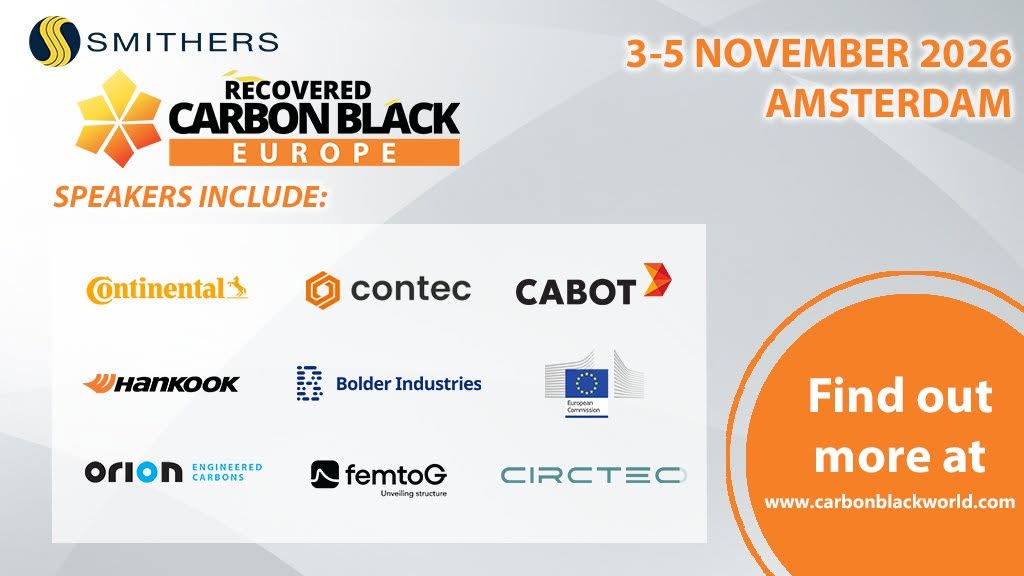
TEMA Process attended and exhibited at the Smither's Recovered Carbon Black Conference in Barcelone to present its fluid bed dryer solutions for recovered carbon black. Egberts also highlighted the importance of industry events in understanding evolving market requirements and technological trends within the rCB sector. He concluded by outlining how TEMA Process had focused on energy savings, operational efficiency and safety as key differentiators, helping the company build a competitive advantage in the rapidly developing tyre pyrolysis and carbon black recovery market.
Inverview by Richard Wilson, Tyre & Rubber Recycling magazine.
Modern tyre pyrolysis plants were increasingly judged not only on conversion efficiency, but also on their ability to deliver end products in a form that could be handled, transported and reused safely. In most cases, this meant supplying recovered materials in a bagged, pelletised format suitable for industrial logistics.
After the pyrolysis process, the solid output was milled into a fine powder and cleaned to remove non-carbon contaminants such as residual steel or mineral particles that had passed through the reactor. This material was referred to as recovered carbon black. Technically, the direct output of pyrolysis was a carbonaceous char, which in most cases required further refinement before it could be classified and sold as rCB.
Recovered carbon black continued to gain acceptance as a sustainable alternative to virgin carbon black, particularly in rubber compounds, plastics and ink formulations. Its commercial viability, however, depended on consistent quality, safe handling and compliance with strict safety standards.
To enable pelletisation, the rCB powder was lightly dampened so it could be compacted into uniform pellets for bagging and transport. Before reuse, these pellets had to be dried evenly and safely. This stage was critical, as fine carbon black dust was both combustible and potentially explosive. As a result, drying systems had to comply with ATEX and/or NFPA regulations, and material handling required a high level of control and care.
TEMA Process, a specialist in thermal drying technology, addressed these challenges through advanced fluid bed drying systems designed for sensitive materials such as recovered carbon black. Its solutions combined precise temperature control, high energy efficiency and comprehensive explosion protection, supporting safe operation while reducing overall operating costs for pyrolysis and tyre recycling facilities.
Source: TEMA Process.
Weibold is an international consulting company specializing exclusively in end-of-life tire recycling and pyrolysis. Since 1999, we have helped companies grow and build profitable businesses.