Illegal tire dumping costs Australian communities nearly A$9 million a year

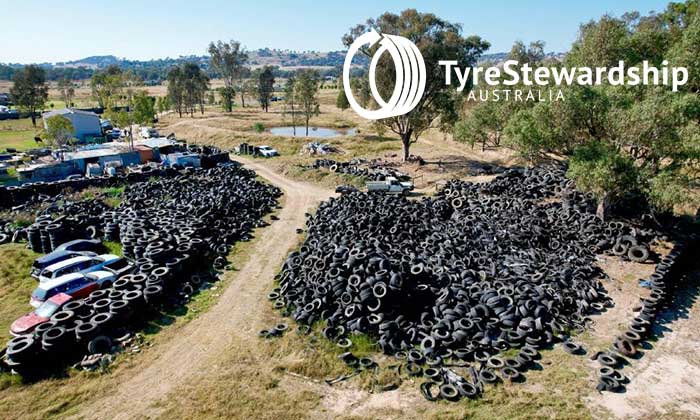
Illegal tire dumping is costing Australian councils and state land managers almost A$9 million annually, while the average cost of cleaning up each dumped tire has risen 41% in two years, according to new research commissioned by Tyre Stewardship Australia and prepared by Blue Environment. Australian local governments spent an estimated A$7.5 million cleaning up 245,000 illegally dumped tires in 2024–25, compared with A$6.5 million in 2022–23, while state agencies spent a further A$1.3 million removing tires from parks, forests and roads. The average council clean-up cost increased from A$22 to A$31 per tire even though fewer tires were recovered, highlighting the growing financial burden associated with transport, labor, equipment and recycling. The report also identifies organized commercial dumping by rogue tire collectors as an important part of the problem and warns that its estimates are conservative because they exclude dumped tires that remain uncollected and much of the waste on private land. The findings arrive shortly after an Australian parliamentary inquiry recommended nationally harmonized end-of-life tire rules and consideration of a mandatory national tire product stewardship scheme.
Australian councils spend A$7.5 million on dumped tires
Blue Environment estimates that local governments spent approximately A$7.513 million cleaning up illegally dumped end-of-life tires during 2024–25. The national estimate covers around 245,000 tires, producing an average clean-up cost of approximately A$31 per tire.
In 2022–23, councils were estimated to have spent A$6.5 million cleaning up 297,000 tires at an average cost of A$22 each. The latest results therefore show that the average unit cost has increased substantially even though the estimated number of tires recovered has fallen.
State land managers add another A$1.3 million
State government land managers spent an estimated A$1.31 million cleaning up illegally dumped tires during 2024–25. Parks accounted for approximately A$636,000 of this expenditure, roads A$534,000 and forests A$140,000.
Combined with council expenditure, the estimated direct public-sector clean-up bill approaches A$9 million annually. The report stresses that this does not represent the full national cost because some dumped tires remain undiscovered or are not removed and the analysis largely excludes dumping on private land and some categories of state-owned property.
Staff time is largest component of council clean-up costs
Staff clean-up time accounted for approximately A$2.225 million, or 30%, of the total council cost. Disposal or recycling fees represented another A$1.976 million, followed by vehicle and equipment costs of A$1.597 million.
Administration contributed approximately A$867,000, investigations, enforcement and prosecution A$601,000, and unspecified expenses A$249,000. Tire clean-ups can require trucks, trailers, cranes, specialist contractors, traffic management, manual handling, sorting, de-rimming and temporary storage before recovered material can reach a tire recycling facility.
Regional councils face highest cost per tire
The financial burden varies considerably depending on geography. Regional councils recorded the highest estimated average cost at A$43 per tire, followed by rural councils at A$32, urban fringe councils at A$30 and urban councils at A$27.
The report links the higher regional costs partly to greater transport distances between dumping sites and tire recycling infrastructure. Remote locations can also require additional labor and specialized equipment to retrieve tires from waterways, embankments, forests and other difficult terrain.
Rural councils face a somewhat different problem. Although their average cost was lower than regional councils, they reported higher levels of tire stockpiling because transporting recovered tires to recycling facilities can be prohibitively expensive.
Dumped tire stockpiles create almost A$1 million in deferred costs
Twenty-two percent of responding local governments reported stockpiling recovered tires during 2024–25. The report estimates that approximately 33,300 dumped tires collected by councils could remain in stockpiles nationally.
Eventually recycling or disposing of this material could generate an additional deferred cost of approximately A$929,000. The report cautions that this figure should not simply be added to the current A$7.5 million annual clean-up estimate because some expenditure on clearing older stockpiles may already be reflected in current costs.
More than half of councils consider tire dumping a significant problem
Fifty-three percent of responding councils classified tire dumping as a significant, major or the worst illegal waste problem they manage. Around 5% considered tires the worst dumped waste type, 12% rated the problem major and 36% significant.
Forty-one percent of councils said illegal tire dumping had increased during the previous two years, while 50% reported no change. Only 8% reported a decline.
Sixteen percent of responding councils said they were unable to keep up with tire dumping incidents, with regional and rural councils generally reporting greater difficulty than densely populated urban areas.
Rogue operators undercut legitimate tire recyclers
The report identifies organized commercial dumping as a significant problem, particularly incidents involving collectors presenting themselves as legitimate tire disposal businesses. These operators can offer tire shops and automotive businesses collection for approximately A$2 to A$4 per passenger tire while avoiding the processing and recycling costs incurred by accredited operators.
Instead of transporting the material to authorized tire recycling facilities, rogue collectors may dump tires on roadsides, farmland, industrial property or secluded bushland. Councils can then face an average cost of A$31 per tire to recover material that was originally collected for only a few dollars.
The report estimates that legitimate tire recycling companies may lose as much as 40% of potential throughput to rogue operators, weakening investment in accredited collection and recycling infrastructure.
Consumers can effectively pay for tire disposal twice
The research highlights a cycle in which motorists may first pay a tire retailer for responsible disposal, only for the tires to be transferred to a rogue collector and illegally dumped. Ratepayers or taxpayers subsequently finance the second collection and clean-up.
Tyre Stewardship Australia CEO Lina Goodman said this means communities are effectively paying twice for the same tires, with public funds being diverted from infrastructure and community services toward waste clean-up.
Individual dumping incidents can become extremely expensive
The report includes several case studies showing how difficult terrain can dramatically increase remediation costs. At Isla Gorge National Park in Queensland, approximately 200 tires were discovered in a deep ravine. A 130-tonne crane was required to retrieve 166 tires, bringing the clean-up cost to A$130,000, or approximately A$783 per tire. No offender was identified.
At Kinglake National Park in Victoria, 2,693 tires were removed from three dumping sites at an estimated cost of A$108,000. The work involved steep terrain, road closures, contaminated material and difficult access. A six-month investigation did not result in prosecution.
Another case in Tarneit, Victoria, involved around 50 tires dumped on Kenning Road. Wyndham City Council estimated that the single incident cost approximately A$5,000 in staff time, equipment, fuel and administration.
Macquarie Pass clean-up required specialized pulley system
One of the report’s largest case studies involved more than 3,400 tires dumped down a steep embankment in Macquarie Pass National Park in New South Wales. Specialist contractors constructed a flying-fox pulley system to haul the tires individually from dense bushland.
The clean-up cost approximately A$200,000. In this case, authorities traced the dumping to the former owner of a tire company, who was held liable for the clean-up under the state’s polluter-pays policy and received an additional A$60,000 in fines.
Dumped tires create fire and environmental risks
Beyond direct financial costs, illegally dumped tires can create serious environmental and public safety hazards. Tire piles are highly combustible, and fires can exceed temperatures of 1,000°C while releasing toxic smoke, fine particulates, heavy metals and contaminated runoff.
Tires left outdoors can also deteriorate and release rubber particles and chemicals into surrounding soil and waterways. Their shape allows them to retain rainwater and organic material, creating potential breeding environments for mosquitoes and increasing disease risks in some areas.
Recovered dumped tires increasingly enter recycling
The report identifies some improvement in how councils manage tires after they are recovered. Recycling was reported as the typical destination by 83% of urban councils and 86% of urban fringe councils, compared with 64% of regional councils and 56% of rural councils.
The rural recycling rate nevertheless improved substantially from 28% in 2022–23. TSA said legitimate tire collectors and recyclers are investing in processing infrastructure and that recovered tires can provide valuable secondary materials for road construction, manufactured rubber products, civil engineering and other circular economy applications.
Consumer survey supports stronger tire management rules
Separate YouGov research commissioned by TSA among 1,051 Australian vehicle owners found that 80% believe councils should not have to use ratepayer funds to clean up illegally dumped tires. Ninety-one percent support national rules requiring used tires to be properly collected and recycled, while 92% believe the tire industry should take greater responsibility for ensuring responsible recycling.
The survey also found that 87% support stronger penalties for illegal tire dumping, while one in three respondents had seen or heard about illegally dumped tires in their community during the previous 12 months.
TSA links findings to national tire reform
The research was published shortly after the House of Representatives Standing Committee on Industry, Innovation and Science released its inquiry into Australia’s tire industry. Several of its 12 recommendations directly address conditions highlighted by the illegal dumping study.
These include nationally harmonized requirements for tire storage, transportation, processing and disposal, consideration of mandatory national tire product stewardship and dedicated support for collection and recycling infrastructure in regional, rural and remote Australia.
Report says true cost of tire dumping is likely higher
The Blue Environment study surveyed 151 of Australia’s 537 local governments, representing approximately 27% of the national population, and supplemented responses with government datasets and modeled estimates. State government agencies and land managers were also surveyed.
The researchers emphasize that their estimate remains conservative. It does not include illegally dumped tires that have not been identified or recovered, most tires dumped or stockpiled on private property, or tires on categories of state-owned land outside the study’s scope. The actual economic and environmental impact of illegal tire dumping across Australia is therefore likely to exceed the nearly A$9 million in direct annual public clean-up expenditure identified by the research.
Original research commissioned by Tyre Stewardship Australia and prepared by Blue Environment.
Weibold is an international consulting company specializing exclusively in end-of-life tire recycling and pyrolysis. Since 1999, we have helped companies grow and build profitable businesses.