
Liberty Tire Recycling and Pirelli discuss U.S. tire recycling markets and rCB development

Tire Technology International’s July 2026 feature on Liberty Tire Recycling and Pirelli highlights how the United States tire recycling market has shifted from historical stockpile reduction toward circular economy applications, new recycled rubber markets and recovered carbon black development. Liberty Tire Recycling said the US has made major progress since the late 20th century, when more than one billion end-of-life tires were estimated to be stockpiled across the country, but the company also noted that tire recycling still depends on stronger markets, supportive regulation and products that can compete economically with disposal routes. The article discusses demand for rubberized asphalt, crumb rubber, molded products, tire-derived aggregate, tire-derived fuel, devulcanized rubber and recovered carbon black, while Pirelli North America describes ongoing work with Bolder Industries to test and scale recovered carbon black use in tire production.
U.S. tire recycling has moved beyond stockpile cleanup
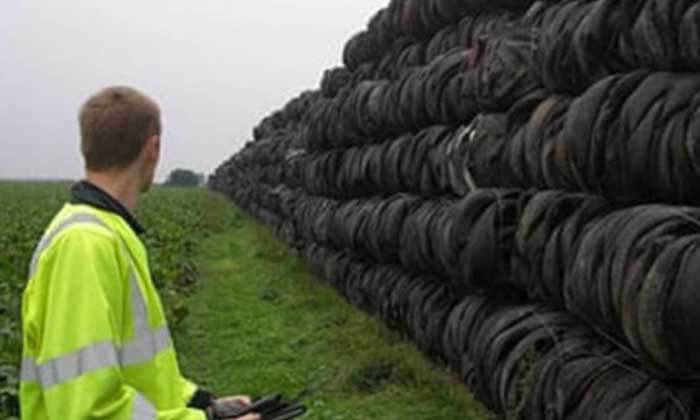
Stratton Kirton of Liberty Tire Recycling said the US tire recycling sector was originally focused on dismantling large tire piles that had accumulated across the country. According to the article, after more than 50 million tires remained in stockpiles as recently as 1990, much of the industry’s work shifted toward processing end-of-life tires and finding uses for recycled rubber. Liberty Tire Recycling has since grown into one of the most prominent companies in the sector, with the article stating that it was founded in 2000 and now has more than 50 million tires from around 15,000 retail locations across North America reaching the company’s recycling network each year.
Regulation still varies by state
Kirton said the US market remains fragmented because tire recycling regulations differ widely between states. He noted that many state tire laws were passed decades ago and are not always built for today’s circular economy objectives. Some states have focused on stopping stockpiling and dumping, while others have added stronger requirements and market-development programs.
The article points to Colorado as one example of a state working to accelerate tire circularity. Colorado has evolved its tire disposal legislation and set up a Waste Tire Management Enterprise aimed at supporting collection and better end uses for scrap tires. The article also references Iowa, where tire legislation has helped raise tire disposal fees, creating more resources for recovery and recycling compared with lower-fee systems.
New markets remain essential for recycled rubber
Kirton said the volume of tires in North America is so large that the industry will continue to need new markets for recycled materials. He explained that making products from recycled rubber avoids landfill disposal costs and creates incentives to use tire-derived materials rather than dispose of them. According to the article, Liberty Tire sells reclaimed rubber products made from its processed materials at more than 15,000 retail locations across North America.
The feature also notes that crumb rubber used in manufacturing, sports fields, flooring and mat production remains part of the market. Asphalt applications are also presented as an important growth area, with Kirton saying that rubberized asphalt can produce quieter and more sustainable road surfaces and that interest in this market has expanded beyond California to other US states.
Tire-derived fuel remains part of the market
The article states that tire-derived fuel remains an important market for end-of-life tires. Kirton said TDF is widely used in cement kilns because tires can act as a complement to biomass and other fuels, while the steel content can help in clinker production. The article also discusses use in pulp and paper facilities and notes that tires can burn cleaner than high-sulfur coal when used in appropriate industrial systems.
At the same time, Liberty Tire emphasized that the industry should continue to prioritize higher-value circular uses where possible. The article presents the market challenge as a balance between existing large-volume outlets and the need to create stronger material recovery pathways.
Rubberized asphalt seen as a major opportunity
Rubberized asphalt is identified as one of the most promising outlets for recycled tire rubber. The article describes projects in states including Arizona and California and notes that rubber-modified asphalt can support road durability, noise reduction and circular material use. Liberty Tire also highlighted newer project work and partnerships aimed at expanding road applications for recycled rubber.
Kirton said some barriers remain, including the need for highway departments, road builders and policymakers to specify rubber-modified asphalt more consistently. The article notes that when virgin polymer-modified asphalt is already used, replacing part of that material with crumb rubber can provide an entry point for recycled tire rubber in road construction.
Pirelli scales recovered carbon black work
The article includes a separate section on Pirelli North America’s recovered carbon black work after closing a loop with Bolder Industries. Liberty Tire supplies Pirelli-sourced feedstock to Bolder’s pyrolysis facility in Colorado, where tires are converted into recovered carbon black. The recovered carbon black is then reincorporated into Pirelli production in Sila, Mexico.
Maureen Kline, Pirelli Tire North America’s Vice President of Public Affairs and Sustainability, said recovered carbon black is one of two major developments in recycled materials at the company, alongside recovered polymers such as materials derived from used cooking oil. She said Pirelli has been testing BolderBlack and working through quality and certification requirements before broader scale-up.
Recovered carbon black supply chain requires scale and quality
Kline said there is strong interest in scaling recovered carbon black, but that the process requires time, quality control and financing. She explained that Pirelli sends scrap tires to Liberty Tire, Liberty sends them to Bolder Industries, and Bolder then processes them into recovered carbon black that goes back to Pirelli. According to the article, all tires are tracked, and the chain-of-custody system is certified.
The article states that recovered carbon black could gain wider use as technology matures and supply chains become more reliable. It also notes that pyrolysis companies have faced financing and operational challenges, making long-term stability and quality consistency important for tire manufacturers considering greater rCB use.
Programs may need stronger end-market focus
Kline said extended producer responsibility programs can support tire recycling, but only if end-of-life markets are also developed. She noted that focusing only on collection programs may not solve the market problem if recycled materials have nowhere to go. The article frames end-market development as a key requirement for circular tire recycling, including applications in rubberized asphalt, tire-derived aggregate, molded rubber products, recovered carbon black and other recycled rubber materials.
The feature concludes that the US tire recycling sector has made significant progress but still needs stronger markets, better-aligned regulation and continued collaboration between recyclers, tire manufacturers, policymakers and end users. For Liberty Tire Recycling and Pirelli, the next stage of tire recycling in North America depends on converting large volumes of end-of-life tires into reliable, high-value materials that support the circular economy.
Article source: Tire Technology International.
Weibold is an international consulting company specializing exclusively in end-of-life tire recycling and pyrolysis. Since 1999, we have helped companies grow and build profitable businesses.