Rubber Review features exclusive interview with Robert Weibold – renowned tire recycling and pyrolysis consultant

Robert Weibold – founder of tyre recycling and pyrolysis consulting company Weibold – was interviewed by the Rubber Review magazine this February. Below, we cite Issue 33 of the Rubber Review magazine (February 16-22) featuring the interview.
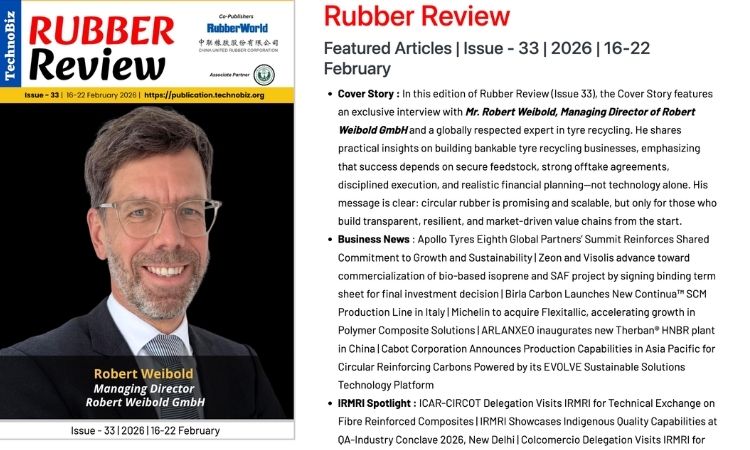
Magazine cover of Issue 33 by Rubber Reviewe magazine.
Conversation with Robert Weibold, Managing Director Robert Weibold GmbH
In this edition of Rubber Review Magazine, we are privileged to feature an exclusive Cover Story interview with one of the most respected global authorities in tyre recycling and advanced chemical recovery — Robert Weibold. As Founder and Managing Director of Robert Weibold GmbH (Weibold Consulting), headquartered in Vienna, Robert brings more than 25 years of experience shaping the global landscape of end-of-life tyre (ELT) management. Through over 500 consulting engagements across four continents, he has supported operators, investors, policymakers, associations, and technology providers in building commercially viable and environmentally responsible tyre recycling ecosystems. His widely followed Tire Recycling Insights newsletter — reaching more than 21,000 industry stakeholders — further strengthens his role as a leading voice in circular tyre economics.
In this special Cover Story interview, Robert offers a clear-eyed yet encouraging assessment of tyre upcycling through advanced chemical recycling, particularly ELT pyrolysis. According to him, the industry is finally transitioning from “promising concept” to engineered, financeable value chains — but only for those prepared to replace hype with industrial discipline. He cautions against viewing pyrolysis as merely a reactor-driven technology. Many earlier ventures failed because they assumed recycled outputs would automatically command high value. True success, he emphasizes, comes from building fully de-risked businesses — anchored in secure feedstock contracts, enforceable offtake agreements, strong governance structures, transparent key performance indicators (KPIs), strict QA/QC systems, and realistic ramp-up assumptions.
Weibold also challenges the “black gold” misconception. Recovered carbon black (rCB) and tyre pyrolysis oil (TPO) are not inherently premium commodities. Their acceptance depends on continuous process improvement, long-term customer qualification, and disciplined quality management. Perhaps most critically, he stresses that ELT feedstock is not generic waste, but a heterogeneous raw material. Its segregation, cleanliness, and secured long-term supply directly influence uptime, emissions stability, yields, and ultimately — bankability. The outlook remains motivating. Industrial-scale builds are accelerating worldwide. However, as Robert makes clear in this insightful conversation, the winners will be those who invest early in execution control, qualification pathways, and integrated supply chains. This Cover Story in Rubber Review Magazine provides more than industry commentary — it delivers a strategic roadmap for transforming tyre recycling ambition into scalable, profitable, and sustainable industrial reality.
Journey & Global Perspective
You have been involved in tyre recycling for more than two decades. What originally drew you to this sector, and how has your role evolved from technical consulting to shaping global market and investment intelligence?
I’ve always been drawn to solutions where you can remove a waste problem and create measurable industrial value at the same time. A second, very personal influence was my uncle—he was among the early pioneers of “turning waste into value” in the 1970s, and he introduced me to end-of-life tyres as a globally available and reliable secondary raw material stream. That combination made the sector irresistible, and frankly, it still does.
In the early years, my work was heavily technical: helping projects get the fundamentals right—process selection, equipment decisions, plant set-up, and understanding the operational realities that separate a business plan from a running facility. Over time, as more projects came across my desk, it became clear that technology alone doesn’t determine success; markets, product positioning, regulation, and bankability do. That’s why my role gradually expanded from pure technical consulting to supporting the full project lifecycle—from concept and funding through engineering, operations, marketing, and sales.
Today, the “market and investment intelligence” side is the natural extension of that journey: building a global network, adding specialized experts, and continuously validating what’s happening on the ground—so clients and investors can make decisions based on reality, not hype. In practice, that means combining technology evaluation with market studies, due diligence, financial modeling, and investor-facing documentation—exactly the kind of end-to-end support that tyre recycling and pyrolysis projects increasingly require to be financeable and scalable.
Having advised hundreds of projects worldwide, what core lessons most clearly separate successful tyre recycling ventures from those that struggle or fail?
I have to preface my answers by stating that we take a truly global view of the industry. Our assessments include opportunities and ventures in Asia, MEA, Africa, and Latin America, as well as European and North American enterprises. If we consider the tyre recycling industry as a whole, it is those ventures that have incrementally adapted their technology to market conditions—including supply chains and off-take—that have succeeded. Investment in equipment is productdriven. If we are discussing thermochemical upcycling of products for international markets, we must recognize that the tyre pyrolysis industry is still maturing. Most operational sites are run by their developers. The successful ones appear to share three factors: they continually develop and improve their processes; they can raise sufficient capital to invest in this continuous development over extended periods (5–10 years); and they are adept at securing feedstock. The jury is still out on the real industrial-scale ventures—many are coming online in the next 18 months. From what we can tell, it is those enterprises that have highly developed—and funded— planning and execution controls in their model that will prevail.
How has your understanding of “viable circularity” in tyres evolved over time—from early optimism to today’s more investment-driven, results-oriented reality?
My view of viable circularity has shifted from conceptual ambition to industrial realism. In the early stages of the industry, the availability of abundant end-of-life tyres—often supported by collection or disposal fees—created the impression that circularity would follow almost automatically. In practice, this environment attracted many short-term players who underestimated the importance of downstream markets and long-term value creation. Over time, it became clear that circularity is not defined by the recycling process itself, but by the ability to place recycled materials sustainably into real markets. Mechanical recycling played a decisive role here, forcing the industry to develop specifications, ensure consistency, and work closely with end users. These fundamentals shaped my understanding that circularity must be commercially anchored rather than subsidy-driven. Today, viable circularity is assessed through an investment lens: stable feedstock supply, proven technology, defined product outlets, and measurable environmental performance. Circularity only becomes meaningful when it delivers repeatable results at scale—technically, economically, and environmentally.
Technology Evolution – From Mechanical to Chemical Recycling
How would you describe the real technological progress in tyre recycling over the last decade, particularly the shift from mechanical recycling toward pyrolysis?
The last decade has seen genuine progress, but not in the linear or rapid way many initially expected. Mechanical recycling has continued to mature incrementally, improving efficiency, product quality, and the breadth of applications. More importantly, it has established the feedstock preparation standards that underpin the advanced recycling routes now in use.
Pyrolysis has undergone a more profound transformation. Ten years ago, much of the activity remained experimental, with substantial variation in process stability and output quality. Since then, the focus has shifted decisively toward continuous operation, process control, and product upgrading, particularly for recovered carbon black (rCB) and pyrolysis oil (TPO).
What is often misunderstood is that chemical recycling has not replaced mechanical recycling; rather, it builds on it. The most successful projects today integrate both, using mechanically processed tyres as a controlled input stream for chemical conversion. This convergence marks real technological progress: tyre recycling is no longer about isolated processes, but about engineered value chains capable of meeting industrial and investor expectations.
Mechanical recycling laid the foundation; pyrolysis is buildingon it. Real progress comes from integrating both intodisciplined, industrial-grade value chains.
Pyrolysis has experienced cycles of hype and disappointment. From your experience, what fundamentally differentiates today’s credible, bankable projects from past failures?
The difference is that the serious projects are no longer “technology stories”; they are fully engineered businesses with enforceable risk allocation. In earlier cycles, many ventures were built around a reactor concept and optimistic assumptions about product prices. When offtake qualification, permitting, utilities, maintenance, and working capital realities were factored in, the model collapsed.
Today’s bankable projects typically show five differentiators:
- Contractual de-risking before the final investment decision (FID). Feedstock supply, enggineering, procurement and construction (EPC) delivery, and offtake are structured to avoid “merchant risk” across all fronts simultaneously. Investors respond to binding contracts, creditworthy counterparties, and clear remedies.
- Industrial operating discipline. Credible developers plan continuous operations with proper redundancy, spare parts strategy, utility integration, emissions control, and qualified staffing. They budget realistic ramp-up curves and accept that performance is earned, not declared.
- Product strategy beyond “selling oil and black.” rCB and TPO markets are qualification-driven. Bankable projects demonstrate a route to specification compliance, an end-user testing program, and a realistic timeline to unlock premium outlets.
- Governance and transparency. The projects that attract institutional capital look like infrastructure: auditable mass and energy balances, product traceability, robust environmental, social and governance (ESG) reporting, and a willingness to disclose performance KPIs.
- Capital adequacy and stage-gated execution. The sector is maturing, but it still rewards teams that can properly fund development through front-end engineering design (FEED, a key pre-FID phase in project development, following feasibility or conceptual studies), permitting, and pre-FID offtake work, rather than hoping construction capital will finance validation.
Which technology-selection mistakes do you still see repeated by first-time project developers and investors?
- Over-indexing on CAPEX and failing to understand why proven systems cost more: The high CAPEX of proven systems is due to higher material and build standards, fully compliant emissions-control systems, documentation, integrated process offerings, and a turnkey scope often including product off-take support, especially for pyrolysis. This is often overlooked: what may seem like a lower upfront cost frequently reappears later as integration risks, re-engineering, operational instability, lower uptime, and a steep learning curve to qualify with premium rCB customers.
- Assuming all pyrolysis systems produce rCB, instead of selecting for an end-to-end quality system: A recurring misconception is that any pyrolysis line produces marketable, high-quality rCB—or that a single reactor design (or a single milling step) is the differentiator. In reality, consistent rCB quality typically results from a combination of multiple equipment systems and processes.
- Ignoring operational realities: The complexity of maintenance, operational knowhow, QA/QC control, and the required depth of technology transfer, documentation, and support are often underestimated. Typical gaps include poor maintenance design, underestimation of operational and process expertise, inadequate documentation, and, importantly, treating rCB commercialization as an afterthought.
Is the industry finally transitioning from pilot and demonstration plants to true industrial-scale operations—or are we still in an extended validation phase?
There is a clear transition underway from pilot and demonstration assets to industrial-scale pyrolysis plants and repeat builds. In addition to technology maturity, the other critical bottleneck has been commercial maturity (product acceptance).
- Why the transition is happening now: The technology has matured, market pull for sustainable products has strengthened, long product-approval cycles have largely been completed, and commercial structures—particularly long-term offtake agreements—have improved significantly.
- Evidence of industrial scale-up: Multiple projects have moved beyond pilot scale into industrial operations and repeat builds, including Circtec in the Netherlands, which has completed the first phase of its ~200,000 TPA facility; New Energy in Hungary, which is constructing a second plant for a major oil company; Eco Infinic, which is expanding capacity in Thailand; and LD Carbon, which has commissioned its flagship plant in South Korea
Feedstock, Quality & Operational Reality
ELT feedstock availability and quality are often underestimated. Why are they so critical to both technical performance and investment success?
I strongly believe that ELT feedstock should not be treated as generic, abundant waste because it behaves like a heterogeneous raw material. In my view, availability matters because national generation figures do not equal bankable supply. Real access is controlled by extended producer responsibility (EPR) systems, tenders, long-term contracts, exports, and competition with established outlets such as cement kilns, all of which determine delivered tonnage and price stability.
Quality always starts with the tyre stream, not the output. A “quality ELT feed” means segregated categories (car, truck, OTR, etc.) with predictable composition, because these streams differ materially in steel, textile, rubber, and filler content— differences that drive operating behavior and product consistency. Contamination is a hidden killer, as sand, stones, mud, rims, fines, and foreign debris increase wear and downtime at recycling plants. ELTs from legacy landfills are often highly contaminated.
Importantly, removing contaminants is not free. Washing and screening, additional separation equipment, and extra handling and labor create higher OPEX and CAPEX. If the business model assumed “clean ELTs,” these cleaning steps directly compress margins and can reverse profitability.
Feedstock availability and quality ultimately determine whether an ELT project is technically reliable and financially bankable. When volumes are uncertain or the incoming tyre stream is inconsistent, plants struggle to run steadily; maintenance becomes unpredictable; yields and emissions performance fluctuate; and products drift out of specification, even if the core technology is sound. The same instability affects the economics by reducing utilization, weakening netbacks, and forcing unplanned spending, which in turn makes offtake harder to secure and financial models more difficult to finance.
The winning projects treat ELTs as a resource with specifications, secure long-term access through contracts and system knowledge, control quality through segregation and cleanliness, and design the plant around that feedstock reality.
How does regional variability in ELT supply affect process stability, output quality, and ultimately project bankability?
Regional variability matters because ELT “availability” is really about deliverable, contractable tonnes at a predictable price. Collection systems, tenders/EPR structures, export pull, and competition from outlets such as cement kilns can make supply steady in one region and volatile in another, thereby driving stop-start operations, lower utilization, and higher unit costs.
These factors also affect process stability and product consistency because regions differ in tyre-type mix (car vs. truck vs. OTR), which alters throughput behavior and yields. Impurities such as dirt and stones cause wear and handling losses, but the greater risk is inter-week variability. Bankability is challenged because investors finance predictable cash flows. Regional variability increases volume risk (the ability to run at nameplate capacity), cost risk (feedstock price and logistics swings), and quality risk (consistently meeting offtake specifications), leading to higher contingencies, weaker debt capacity, and discounted valuations.
From an investor’s viewpoint, how important is secure long-term feedstock access compared to technology selection?
I always emphasize in my discussions with new entrants to the industry that technology is an important performance lever, but feedstock is a survival requirement. From an investor’s viewpoint, securing long-term feedstock access is usually more important than technology selection. Technology defines how efficiently you can process ELTs, but feedstock determines whether you can run at high utilization for 10–15 years with predictable costs—the basis of bankable cash flows.
A large portion of losses can originate from being underfed or forced into spotmarket procurement. Volumes fluctuate, prices move against you, and stop-start operations drive up unit costs. Lenders discount that risk faster than most technology risks because it directly threatens debt service.
Recovered Carbon Black (rCB) – Technology Meets MarketRecovered carbon black is often presented as the key value driver in tyre recycling. Is this expectation realistic under today’s market conditions?
Yes, this expectation is realistic under current market conditions. Recovered carbon black (rCB) has progressed beyond pilot-scale validation and is now being deployed in commercial tyre and rubber applications. The material is no longer treated as an experimental output of pyrolysis, but rather as a defined secondary raw material with measurable and increasingly standardized properties.
From a technical standpoint, the adoption of ASTM standards for rCB has significantly improved transparency regarding colloidal characteristics, ash content, and performance. This standardization enables compounders and tyre manufacturers to evaluate rCB using consistent test methodologies and to qualify it in industrial rubber compounds, rather than relying solely on laboratory-scale trials. Market adoption is evidenced by multiple commercial-scale collaborations between rCB producers and Tier-1 tyre manufacturers, including LD Carbon–Hankook, Enviro–Michelin, Reoil–Sumitomo Rubber, Enrestec–Bridgestone, and Pyrum– Continental. These collaborations demonstrate that rCB is being integrated into real products and supply chains rather than merely tested in R&D environments.
In parallel, established carbon black producers are actively facilitating market adoption. Birla Carbon (with Circtec), Continental Carbon (with Bolder Industries), and Orion and Cabot have introduced rCB-containing products or blends, indicating alignment across the carbon black value chain. In addition, Epsilon Carbon in India has commenced its own rCB manufacturing operations, further confirming industrial acceptance.
From an application perspective, rCB is best suited to high-volume, semi-reinforcing carbon black grades, particularly N660. Global carbon black demand is approximately 15 million tonnes per year, with around 70% consumed by the tyre industry. N660 accounts for roughly 18–22% of total demand, corresponding to approximately 3 million tonnes annually, making it the most scalable and commercially viable substitution target for rCB.
Technically, rCB exhibits reinforcement behavior most similar to N550–N660 grade carbon blacks. Although its ash content reduces reinforcing efficiency relative to virgin carbon black, this limitation can be mitigated through formulation optimization and partial substitution strategies. In practice, rCB is used as a complementary material rather than a direct replacement. Typical substitution levels of 10–30% already represent substantial commercial volumes.
As a result, rCB has emerged as the primary value driver in tyre recycling. It enables meaningful CO₂ emission reduction, supports circular economy objectives, and creates economic value without requiring fundamental changes to existing tyre formulations.
In conclusion, the technology has been proven and market demand is established. The key focus has shifted from validation to industrial scaling, with emphasis on consistency, quality control, and integration into existing supply chains. rCB does not need to fully replace virgin carbon black to be successful; targeting high-volume N660-type applications alone makes it commercially and strategically viable under current market conditions.
What technical, commercial, or qualification barriers still prevent rCB from replacing a larger share of virgin carbon black?
From a technical perspective, it is important to clearly distinguish between virgin carbon black (vCB) and recovered carbon black (rCB).
Virgin carbon black is a highly controlled material consisting of approximately 99–100% elemental carbon. Any other materials required in tire manufacturing—such as silica, zinc oxide, calcium compounds, oils, and curatives—are added separately during the rubber formulation process. This controlled purity and structure give virgin carbon black its predictable and well-defined reinforcing behavior.
Recovered carbon black, by contrast, is an engineered material extracted from endof-life tires. Because it is derived from waste rubber, rCB differs fundamentally in composition. It typically contains approximately 85% effective carbon, with embedded inorganics such as silica, zinc oxide, zinc sulfide, and calcium-based compounds that were already part of the original tire formulation. In addition, rCB contains residual carbonaceous material formed during the pyrolysis process.
Technically, when rCB is used in rubber compounds, it behaves as a blend ofmultiple carbon black grades. These typically overlap with the N550 and N660grades and partially with the N300, N200, and N1000 series carbon blacks, reflectingthe different grades used in the tread, sidewall, and carcass components of tires.Because of this mixed origin, there can never be 100% equivalence between virgincarbon black and rCB.
This is precisely why the ASTM committee has defined rCB as a separate material category rather than as a direct substitute for virgin carbon black. This distinction is technically justified and, in practice, beneficial. rCB already contains part of the additive system required in tire compounds, which—when properly understood and controlled—can be leveraged in formulation design.
rCB has moved from experimental output to primary value driver—proven in technology, established in market demand, and scalable in high-volume applications.
When comparing rubber performance, compounds containing rCB can achieve levels very close to those of virgin carbon black, particularly in semi-reinforcing applications. However, rCB requires formulation adaptation. It is not intended for full replacement; rather, it is typically used as a partial substitute, with adjustments in filler loading, oil content, and curing systems to compensate for ash content and surface chemistry. Major Tier-1 tire manufacturers have already completed this adaptation work and have publicly shared performance data at platforms such as Tire Technology Expo, Traction Summit, and other industry forums.
Consistency remains a key technical requirement for the broader adoption of rCB. Unlike virgin carbon black, which offers extremely high batch-to-batch uniformity, rCB quality is influenced by feedstock composition and process control. While ASTM frameworks are now in place, broader adoption and alignment around standardized testing and grading are essential. A common testing and classification system will help off-takers clearly understand rCB quality and predict final rubber performance.
From a commercial perspective, the rCB market currently faces significant challenges. Geopolitical tensions, particularly the Russia–Ukraine war and associated sanctions, have disrupted energy and raw material markets. At the same time, lowpriced carbon black exports from China are exerting downward pressure on both virgin carbon black and rCB pricing, thereby making market penetration more difficult. Logistics costs and pricing volatility further add to these challenges.
In addition, REACH certification remains a major hurdle in Europe. The process is complex and expensive, and currently only Circtec has achieved REACH registration under the rCB substance category. As rCB volumes increase across Europe and APAC, achieving REACH compliance will be critical for large-scale market penetration. Until this is resolved, along with logistics and pricing pressures, market growth will remain constrained.
Despite these challenges, rCB has clearly moved beyond pilot-stage validation into commercial reality. With improved consistency, broader standardization, regulatory alignment, and stabilization of market conditions, the rCB market is well positioned to perform significantly better than it does today.
Do you see stronger growth potential for rCB in tyre-to-tyre applications or in non-tyre sectors such as plastics, inks, and construction?
If we consider the future of recovered carbon black, tyre-to-tyre applications will remain the primary driver of growth. The reason is simple: tyres consume very large volumes of carbon black, so even partial substitution with rCB creates significant demand. Over the past few years, major tyre companies have already built a strong foundation for this transition. Collaborations and published white papers from companies such as Michelin and Bridgestone have demonstrated that rCB can be applied in real-world tyre applications. This gives confidence to other tyre manufacturers and motivates them to start working with rCB producers as well.
From a technical point of view, rCB naturally contains silica and zinc compounds, which are already used in rubber formulations. This is particularly beneficial in many rubber applications, especially in mechanical rubber goods, where performance requirements are less stringent than in tyre tread compounds. As a result, mechanical rubber goods are often the first and easiest entry point for rCB adoption.
A good example here is Semperit Group, one of the largest manufacturers of industrial rubber products. Semperit produces hoses, conveyor belts, profiles, and engineered elastomer components, operates 16 manufacturing sites, and supplies customers in over 100 countries. Applications like these are well suited for rCB, particularly in carcass, belt, and hose compounds.
The second-strongest growth segment after tyres is mechanical rubber goods (MRG). In this segment, rCB is generally easier to integrate than in plastics. Plastics, coatings, inks, and pigments tend to grow more slowly because ash content in rCB affects dispersion, colour strength, and surface finish, which are critical in these applications. That said, low-ash rCB grades show strong potential in plastics masterbatch and pigment applications. When ash levels are sufficiently reduced, rCB can deliver good blackness and dispersion. This is why further ash reduction and quality improvement remain key development areas for rCB producers.
Today, many masterbatch manufacturers already use rCB in applications where colour sensitivity is low. In these cases, rCB provides a commercial advantage over virgin carbon black while still meeting performance requirements. In summary, tyres and mechanical rubber goods will continue to drive rCB growth due to volume, compatibility, and sustainability benefits, while plastics and pigments represent a longer-term opportunity as rCB quality continues to improve.
How critical is early collaboration between recyclers, compounders, and tyre manufacturers at the formulation and testing stage?
Early collaboration is absolutely critical for the successful adoption of recovered carbon black, especially in safety-critical tyre applications. Unlike virgin carbon black, rCB is an engineered material whose properties depend on feedstock, process control, and post-treatment. As a result, tyre manufacturers must be involved from the earliest formulation stage, not only during final qualification.
- In our work with clients, we see that projects progress significantly faster when recyclers, compounders, and tyre manufacturers collaborate early. This allows rCB quality specifications, consistency targets, and formulation adjustments to be aligned from the beginning, reducing costly redesigns later in the process.
- This approach is already reflected in the market. Tier-1 tyre manufacturers such as Michelin, Bridgestone, and Continental have invested in and partnered with key pyrolysis players, clearly signalling that rCB integration must begin upstream. These collaborations help tyre companies influence material consistency and performance before rCB reaches large-scale production.
- Geography also plays an important role. Close proximity between rCB plants and tyre manufacturing sites significantly improves qualification efficiency. Tyre validation typically takes up to three years, covering laboratory trials, pilot production, industrial trials, and long-term durability and safety testing. Early collaboration helps streamline this timeline by enabling faster feedback loops and joint problem-solving.
- Without early and coordinated collaboration, rCB qualification becomes slower, more expensive, and riskier. With it, rCB can be successfully validated, scaled, and integrated into tyres and mechanical rubber goods, thereby supporting both performance and reliability goals while advancing sustainability objectives.
Investment Landscape & Business Models
From an investment perspective, how attractive is tyre recycling today compared with other circular-economy or waste-to-value sectors?
Again, we have to differentiate between markets. In regions where there is an imminent need for alternative energy sources, labour is inexpensive, and environmental and safety regulations are less stringent, opportunities tend to attract high-risk private-enterprise capital because of their rapid payback, typically 2–3 years.
At the other end of the spectrum, larger-scale projects in Western jurisdictions— because of their much higher CAPEX and OPEX—only succeed in attracting institutional investors if they can contractually de-risk the project before final investment through binding supply, construction, and off-take contracts. This is not something suited to thin start-up wallets.
The picture will change as best-practice benchmarks become more visible. However, at present, unlevered IRRs of around 18% and cash-positive milestones in 7–10 years are only marginally attractive relative to more established sustainability industries, because they still carry residual risk. There is, however, upside potential arising from as-yet-unexplored specialized fuel markets (e.g., SAF) and high-end carbon markets (e.g., graphene).
Which segments of the tyre recycling value chain currently offer the strongest investment potential—ELT logistics, preprocessing, pyrolysis, devulcanization, rCB upgrading, or downstream products?
None of the individual sectors in the value chain is sufficiently developed to warrant large institutional investments on a standalone basis. They are interdependent, the economic distribution of value-added has not yet been commonly established, and intermediate products have not been sufficiently commoditized. Integration is therefore essential. This will change as supply in each sector approaches saturation and specialized markets for very high-value material products emerge. Once market liquidity is sufficient, opportunities will arise for CAPEX-intensive material-upgrading processes that can only be realized at certain economies of scale. rCB upgrading may be one such example; AI-supported feedstock management is another.
Notwithstanding the obvious economies of scale of larger plants, the optimum facility size is largely determined by the availability of ELT feedstock within a certain radius of the plant location. This varies significantly by region. In the US, it is generally easier to secure 20,000–40,000 tons of ELT than 40,000–80,000 tons. In Northern Europe, where feedstock bottlenecks are emerging, the viable sourcing radius is expanding to over 1,000 km, with sophisticated rail- or ship-based just-intime logistics mitigating higher feedstock procurement costs. India represents a completely different dynamic in terms of feedstock. Long-established trading routes have existed, some of which are now partially at risk (e.g., export bans from Europe), potentially leading to a phase of “survival of the fittest.”
From a financier’s perspective, which risk currently weighs more heavily— technology risk or market and offtake risk?
Although the field of available technologies is not exhaustive, sufficient competition among proven technology suppliers already exists in this maturing industry to meaningfully mitigate technology risk. For Western installations, equipment investment accounts for approximately 30–50% of total required capital expenditure. In our view, the investment community currently perceives that market uncertainty and price volatility for both TPO and rCB outweigh technology risks.
What financial or operational assumptions most often make tyre recycling business plans unrealistically optimistic?
One of the most underestimated aspects of any tyre recycling enterprise is the longterm security of feedstock. Another is the time required to secure long-term offtake agreements, especially for rCB. All successfully financed and operational facilities allocate considerable resources, time, and capital to ongoing product development in close collaboration with material end users. In addition, the time and costs involved in obtaining the necessary permits and certifications to access international markets are often underestimated. These factors are frequently overlooked in facility development execution plans, financial models, and budgets.
Economics, Returns & Financing
What return expectations should investors realistically have from tyre recycling projects compared to conventional manufacturing investments?
Under normal circumstances, using realistic assumptions for offtake price levels and without subsidies or carbon credit revenues, a mid-sized tyre pyrolysis plant should demonstrate an EBITDA margin near or above 50%. Free cash flows should allow recovery of the total investment within 7–9 years, with a return on total investment (10-year IRR) of at least 18%. This is comparable to investments in similarly sized industrial manufacturing projects.
The biggest mistake in tyre recycling is underestimating feedstock security and overestimating the speed of market qualification.
Are there under-invested areas in the value chain that investors commonly overlook but which offer strong strategic leverage?
Anticipating that a base volume of chemical upcycling of tyres will be achieved soon, investment in the development of certain tyre-derived carbon products with specialized qualities will become increasingly relevant (e.g., de-ashing). This segment is likely to attract more venture-capital-style investment.
How important is vertical integration for investors seeking stable and predictable returns in tyre recycling?
Technically, the upcycling process steps of producing tyre pyrolysis oils (TPOs) and rCB finishing are inseparable. What is clearly needed is the integration of ELT collection and mechanical decomposition as preprocessing steps. How feedstock for an upcycling operation is secured is the first question investors will ask. Not only is stable volume required, but control over origin and composition (tyre mix) also affects the consistency of the output products. This integration can be achieved through mergers and acquisitions, as well as through tight, long-term, binding strategic agreements in which the feedstock supplier participates in the value created by predictable supply.
In this way, investors can be assured that shifting demand caused by changing global regulations will not endanger an operation’s viability within a 10–20-year investment horizon.
Pyrolysis, Scale & Capital Allocation
What scale, technology maturity, and offtake structure do investors typically expect before committing capital to a pyrolysis project?
That, of course, depends on the risk profile and asset class of the invested capital. Based on our observations, the investment structure will invariably involve both private equity and debt or bond-like capital, with the expectation that the capital will primarily be deployed into a bricks-and-mortar facility. This means that the majority of feedstock supply, technology, construction, and offtake is secured through binding contracts, with risk largely transferred to experienced contracting entities. Core technology is expected to be at TRL 9. This places a heavy burden on pre-FID budgets for entrepreneurs and their key project development partners, typically reaching or exceeding the high seven-figure mark (USD). Hundreds, if not thousands, of planning and engineering hours will have been invested before a final investment decision is made. A phased fundraising approach is always warranted, with risk diminishing and valuation increasing at each stage.
Do modular, mid-scale plants offer a better risk-return profile than mega-scale facilities, especially in emerging markets?
Most of the new projects currently being financed are conceived to reach large scale (upward of 80,000 metric tons of ELT per annum). However, nearly all of them begin with a smaller facility that is initially financed and designed to be expanded or replicated within one to two years after operations begin.
Notwithstanding the obvious economies of scale of larger plants, the optimum facility size is largely determined by the availability of ELT feedstock within a certain radius of the plant location. This varies significantly by region. In the US, it is generally easier to secure 20,000–40,000 tons of ELT than 40,000–80,000 tons. In Northern Europe, where feedstock bottlenecks are emerging, the viable sourcing radius is expanding to over 1,000 km, with sophisticated rail- or ship-based just-intime logistics mitigating higher feedstock procurement costs. India represents a completely different dynamic in terms of feedstock. Long-established trading routes have existed, some of which are now partially at risk (e.g., export bans from Europe), potentially leading to a phase of “survival of the fittest.”
From a financier’s perspective, which risk currently weighs more heavily—technology risk or market and offtake risk?
Although the field of available technologies is not exhaustive, sufficient competition among proven technology suppliers already exists in this maturing industry to meaningfully mitigate technology risk. For Western installations, equipment investment accounts for approximately 30–50% of total required capital expenditure. In our view, the investment community currently perceives that market uncertainty and price volatility for both TPO and rCB outweigh technology risks.
What financial or operational assumptions most often make tyre recycling business plans unrealistically optimistic?
One of the most underestimated aspects of any tyre recycling enterprise is the longterm security of feedstock. Another is the time required to secure long-term offtake agreements, especially for rCB. All successfully financed and operational facilities allocate considerable resources, time, and capital to ongoing product development in close collaboration with material end users. In addition, the time and costs involved in obtaining the necessary permits and certifications to access international markets are often underestimated. These factors are frequently overlooked in facility development execution plans, financial models, and budgets.
Economics, Returns & Financing
What return expectations should investors realistically have from tyre recycling projects compared to conventional manufacturing investments?
Under normal circumstances, using realistic assumptions for offtake price levels and without subsidies or carbon credit revenues, a mid-sized tyre pyrolysis plant should demonstrate an EBITDA margin near or above 50%. Free cash flows should allow recovery of the total investment within 7–9 years, with a return on total investment (10-year IRR) of at least 18%. This is comparable to investments in similarly sized industrial manufacturing projects.
In tyre recycling, geography defines economics—what works in the U.S. may not work in Europe or India.
How important are long-term offtake agreements in securing financing, and what common mistakes do developers make when structuring them?
To secure investor sign-off, long-term (five years or more) offtake agreements should be in place with reputable customers for at least two-thirds of the production volume. A sound trade-off must be made when deciding whether to invest early in relevant certifications to secure access to lucrative international programs. For TPO, terms for sharing achieved premiums are seen in selected markets. In some cases, favorable terms are offered to secure long-term deliveries.
Developers should negotiate exit terms at the outset to avoid being locked into deliveries in case global demand for sustainable products drives future price increases, thereby allowing significantly higher margins that could, in principle, also be shared with the offtaker.
Do carbon credits, green finance instruments, and sustainability-linked loans materially improve project economics, or are they still secondary incentives?
Investors generally prefer to see a healthy return based on pure product sales, without relying on subsidies, sustainability-linked loans, or carbon credits as primary revenue sources. That said, given current TPO and rCB pricing levels, CAPEX for TRL 9 equipment, construction costs in developed countries, and high labor and energy costs (particularly in Europe), projects tend to fall at the lower end of the acceptable ROI spectrum. Ancillary income from emissions avoidance or similar programs may be required to improve margins. As a rule, final investment decisions are most likely made based on core product returns. However, investors will certainly welcome additional upside created by carbon credits, low-interest loans, local tax incentives, or direct subsidies.
Regulation, Policy & Investor Confidence
Which regulatory mechanisms have proven most effective in accelerating investment—EPR schemes, landfill bans, recycled-content mandates, or CO₂ pricing?
In practice, the most effective frameworks are those that create predictable, bankable cash flows and reduce policy volatility. Different instruments work at different points in the value chain, but they are most effective when combined.
- EPR (Extended Producer Responsibility) with well-designed fee modulation is often the highest-impact mechanism for tyres. It professionalizes collection, stabilizes feedstock access, and can finance preprocessing infrastructure. Where EPR is transparent, enforced, and insulated from short-term political cycles, it materially improves investor confidence.
- Landfill bans and enforcement against illegal dumping or export leakage are powerful, but only if enforcement is credible. A ban that exists only on paper simply shifts material flows and increases “grey market” competition.
- Recycled-content mandates can be transformative when they are technically grounded (clear definitions, specifications, and verification mechanisms). For tyre-derived outputs, mandates that rely on mass-balance accounting require clear rules; otherwise, they can create reputational and legal risks for brand owners.
- CO₂ pricing and carbon-intensity (CI) programs can improve project economics, but financiers usually treat them as upside unless the program is long-lived and eligibility rules are stable. Where CI credit markets are robust and compliance demand is structural, they can materially strengthen the investment case.
The consistent theme is bankability: the best regulation reduces uncertainty around feedstock availability, market access, and environmental permitting—and does so for a duration aligned with a 10–20-year investment horizon.
Which regions today offer the most investor-friendly regulatory environments for tyre recycling projects?
Investors generally prefer jurisdictions that combine (1) enforceable ELT governance, (2) predictable permitting, and (3) credible demand signals for circular materials.
- Mature EPR markets with transparent governance tend to be the most financeable because collection and preprocessing are organized and the regulatory “rules of the game” are stable.
- Jurisdictions with clear emissions permitting pathways for pyrolysis (including defined BAT expectations, monitoring requirements, and established timelines) reduce schedule risk—often the single biggest hidden cost driver.
- Regions with established sustainability and traceability frameworks (and buyers who can legally and reputationally accept mass-balance claims) are more attractive for projects targeting premium offtake.
By contrast, markets that appear attractive due to low costs can be less investorfriendly if enforcement is inconsistent, permits are discretionary, or policy can swing sharply following a change in government. For institutional capital, predictability often matters more than theoretical headline returns.
How will upcoming regulations on chemical recycling, mass balance, and traceability affect investor confidence and material acceptance?
These rules will be a net positive for serious operators because they convert “marketing claims” into verifiable compliance attributes—but they will also raise the bar and increase early-stage workload.
Key impacts:
- Higher acceptance among brand owners and strategic offtakers. Clear mass-balance and chain-of-custody rules allow tyre manufacturers and chemical companies to defend recycled-content claims and reduce reputational risk.
- More predictable pricing for compliant molecules and materials. Once traceability is standardized, premiums become easier to contract. That enables longer-term offtake structures and improves financing terms.
- Upfront cost and capability requirements. Operators will need robust data systems, auditable measurement frameworks, and third-party verification. Projects that treat traceability as an afterthought will face delays in market access.
- A shakeout of non-credible supply. Stricter definitions and enforcement typically compress the gap between “declared” and “provable” circularity. This tends to benefit operators who invest early in compliance, QA/QC, and documentation.
Overall, the direction is favorable: investors prefer rule-based markets. What they will not finance is ambiguity—especially where product claims could be challenged after commissioning.
Strategic vs Financial Investors
How do the expectations of strategic investors—such as tyre manufacturers or carbon black producers—differ from those of financial investors or private equity?
Strategic investors will rarely provide the total equity required to realize plant construction. They typically invest to secure a secondary (sustainable) material supply over the long term at a predictable price range. Exceptions occur when they perceive a unique technological capability that enables differentiation of their end products. However, strategic investors often face more internal approval hurdles within their vertically structured management systems than financial investors. As a result, more time must be allocated—and often bridged with interim capital—before funds can actually flow. That said, while technologies are still establishing themselves in the market, participation in even a relatively small strategic investment round can significantly strengthen a project’s credibility and help convince private equity investors of its viability.
Beyond offtake agreements, what practical role can tyre manufacturers play in de-risking recycling investments?
There is currently a significant number of projects in the fundraising stage worldwide. At present, it is generally easier to demonstrate the ability to sell TPO than rCB. Prices for rCB are stagnating, largely due to market liquidity constraints. Project initiators must demonstrate their ability to monetize future rCB output to investors. Many encounter a classic chicken-and-egg problem: investors seek highly secure offtake agreements, while tyre manufacturers prefer multiple sources of stable, well-tested materials before onboarding new suppliers.
However, the diversity of underlying technologies is narrowing, and the quality of rCB produced is converging. ASTM is working to standardize specifications and testing methods. Although adaptation to tyre manufacturers’ internal processes and tolerances may still be required as sustainable carbon replacement ratios increase, efforts to pre-qualify and approve products from the limited number of TRL 9 technologies available today—combined with standardized offtake terms that protect both seller and buyer—would significantly accelerate project development and improve market liquidity.
Do you see tyre recycling evolving into a globally traded secondary raw materials industry, similar to the metals or paper industries?
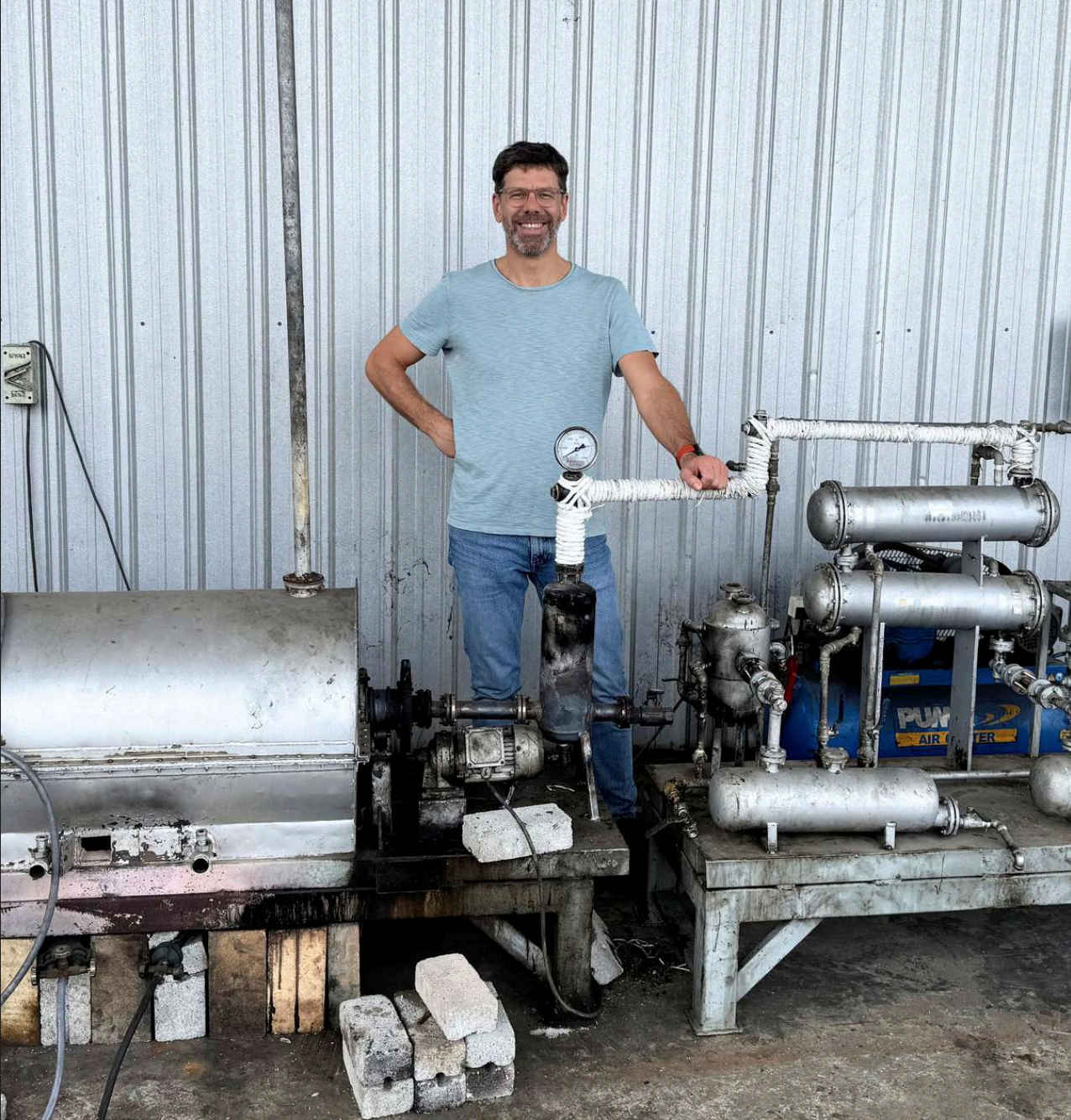
Yes—but selectively, and only where products become standardized, certified, and logistically efficient. Metals and paper trade globally because they have agreed specifications, deep liquidity, and well-understood quality bands. Tyre-derived outputs are moving in that direction, but they are not there yet.
I expect global trade to grow first in two areas:
- Tyre pyrolysis oil (TPO) and circular feedstock streams, where certification, traceability, and refinery or petrochemical integration can enable scalable demand.
- Upgraded rCB and derived carbon products, once consistency improves and specification frameworks mature. Without standardization and predictable formulation performance, trade will remain limited and relationship-based.
However, material constraints remain:
- Regulatory definitions and waste-shipment rules can either enable or restrict crossborder flows.
- Logistics economics will favor regions that can aggregate sufficient volumes and ship efficiently.
The trajectory is toward a globally traded market—but the industry must earn that position through standardization, transparency, and consistent performance. Projects that internalize this early will be the ones that secure strategic offtake and durable investor confidence.
Future Outlook & Advice
Which regions do you believe are currently over-investing in recycling capacity, and which remain significantly under-invested?
In general, I would not label any region as “over-” or “under-invested” in recycling capacity in absolute terms—the market is still in a global ramp-up phase toward higher recycling volumes and more consolidated, industrial-scale facilities. To provide a region-wise overview: Europe is capacity-hot in certain hubs; the U.S. is improving; developing APAC is at risk of fragmented overbuilding of micro-facilities; and MEA is structurally underdeveloped but accelerating—especially in the GCC.
- Europe is a healthy and accelerating recycling market and currently the most active pyrolysis region, with an estimated ~1 million tons of ELTs expected to be processed annually by 2030. This growth is supported by at least 10 projects already under construction and many more approaching final investment decisions. The Benelux region has emerged as a clear hotspot, with projects such as Circtec’s planned ~200,000 TPA facility, Bolder’s ~30,000 TPA project in Antwerp, and at least three additional developments (Tyros, ReSource, ReNewGreen) at various stages ranging from construction to FID.
- The U.S. has become increasingly active, with numerous recycling and pyrolysis projects in advanced planning stages and awaiting final investment decisions. Despite political and regulatory uncertainty, several projects have recently progressed, driven by growing demand for circular materials, corporate sustainability commitments, and improved offtake structures. The region is now transitioning toward its first wave of large, industrial-scale deployments, with momentum expected to continue as permitting clarity and customer qualification advance.
- Developing APAC markets are characterized by fragmented “micro-facility” capacity, often operating at maximum regional limits and sometimes dependent on imported feedstock from Western markets. The region is highly competitive, with many small plants competing for similar economic opportunities. The risk here is not necessarily total capacity but challenges related to product consistency, regulatory compliance, and securing premium offtake—particularly for rCB, where pricing remains under pressure. Nevertheless, the healthy longterm direction is toward fewer, larger, and better-regulated facilities.
- MEA remains structurally underdeveloped, especially beyond selected GCC-led initiatives. Industrial-scale recycling infrastructure is limited, and many facilities in parts of Africa operate at micro-scale, similar to parts of Asia. However, momentum is improving—particularly in the GCC, where landfill constraints and economic diversification strategies are driving project development. For example, Saudi initiatives such as Reviva (PIF) are progressing projects with established technology suppliers such as Enrestec, alongside other active developments in the region.
Looking toward 2030, what factors will ultimately define success in tyre recycling—technology, regulation, market pull, or capital discipline?
Success in this industry will not be driven by any single factor, nor is there a onesize-fits-all solution. While the underlying technology is sufficiently mature to scale, long-term success will depend on strong market pull supported by clear and enforceable regulation, and sustained through disciplined capital deployment.
Different regions face distinct structural and market challenges. For instance:
Across much of the APAC region, project developers are seeking to upgrade facilities to comply with EU-level regulations, mitigate global scrutiny related to pollution, and participate in international trade. However, economic viability is constrained by several structural factors. These include high feedstock prices—typically USD 150–200 per ton or higher in certain locations—driven by unregulated and highly volatile feedstock markets; weak market pull for sustainable products, with rCB and TPO generally priced at only ~USD 300–500 per ton; and the lack of long-term offtake agreements. Under these conditions, projects cannot scale despite capital availability and technology readiness. Addressing these fundamental challenges will require targeted regulatory intervention.
By contrast, in Europe and the United States, the primary challenge lies in reducing high technology and capital costs. At present, most facilities are being developed by small-scale technology providers that have spent years refining their processes and are now fabricating and constructing plants with external support. Over time, as these technologies become more standardized and construction shifts toward mainstream industrial execution, overall facility costs are expected to decline. Given current global market conditions, such cost reductions are essential to the long-term viability of business models.
If you were advising a government designing a national ELT ecosystem today, what three priorities would you recommend?
In my opinion, the three priorities are to make the system stable to fund, hard to cheat, and diverse in end markets. That is what keeps plants running, protects compliant recyclers, and makes the entire ELT ecosystem investable over the long term. If I were advising a government, I would focus on the elements that make a national ELT ecosystem predictable, enforceable, and investable. The common failure mode worldwide is weak governance, unstable funding, and “leakage” of tyres into informal or low-control channels that starve compliant operators and leave governments managing stockpiles.
- Build a governance and funding model that is reliable. Select a clear national operating model and define the roles in law: who is obligated, who pays, who manages contracts, and who audits outcomes. What matters most is clarity, accountability, and stable rules. The system must be designed to fund ELT management in a predictable manner. For recyclers, “reliable” means multi-year visibility, with contracts and fee structures that support real investment in compliant capacity rather than annual uncertainty and lowest-bid turnover.
- Make data, traceability, and enforcement as important as recycling targets. Targets without control systems create leakage: tyres can disappear into informal channels or be illegally dumped, while compliant operators are deprived of feedstock and governments are left with stockpiles. A modern system therefore requires registration of producers and importers, mass-balance reporting (for materials placed on the market, collected, and treated), and end-to-end traceability from generator to collector to processor. Enforcement must be designed from day one through licensing, routine audits, minimum storage standards, and penalties that genuinely change behaviour. The ecosystem only functions if compliant actors are not undercut by non-compliance.
- Create resilient end markets and avoid designing the system around a single outlet. Governments often focus heavily on collection and underestimate the importance of demand. A national ELT ecosystem should support a hierarchy of outcomes—reuse and retread where appropriate, followed by material recycling, then chemical recovery, with energy recovery as a last resort—but it must also create multiple, durable outlets for compliant outputs.
Regulation can change markets quickly. For example, the EU microplastics restriction under REACH illustrates how a major outlet such as synthetic sports surface infill can be constrained over time (albeit with a defined transition period for granular infill). At the same time, recyclers require regulatory certainty to sell materials across borders and into manufacturing markets. Industry groups have highlighted harmonised “end-of-waste” criteria as a key missing element in strengthening tyre recycling markets and uptake. A smart policy therefore diversifies outlets early, ensuring that a single market shock does not destabilise the entire system.
What advice would you give investors and entrepreneurs entering the tyre recycling space for the first time?
A clear understanding of the tyre recycling industry and the purpose behind the project is fundamental. These projects are capital-intensive and often take longer than expected to reach stable operations; therefore, starting conservatively and scaling gradually is essential. Securing long-term feedstock supply and understanding local collection systems, logistics costs, and regulatory requirements should precede any commitment to technology. Regulations can be restrictive, but within those boundaries, opportunities often exist that support project development. It is also important to be realistic about technology maturity, as many solutions perform well at pilot scale but struggle in commercial settings. Market development is as important as the process itself: output products must meet clear customer specifications, and consistency in product quality is fundamental. In short, success in tyre recycling depends on disciplined execution, realistic assumptions, and early alignment among feedstocks, technologies, and end markets.
What skills and expertise will be most critical in management teams to ensure long-term success in this industry?
Long-term success in the tyre recycling industry depends largely on a balanced mix of technical, commercial, and execution-focused skills. Strong operational and engineering expertise is critical to ensuring stable and consistent plant performance, as well as to managing commissioning, ramp-up, and ongoing operations. Equally important is solid market and commercial knowledge to successfully place output products and align quality with end-user requirements. A strong understanding of regulatory frameworks and compliance is also essential, as regulation significantly affects project economics and long-term viability. At the same time, the industry is expected to undergo considerable change in the coming years, making realistic decision-making and adaptability crucial across all aspects of the business— particularly when transitioning from pilot or early-stage projects to full commercial operations. Tyre pyrolysis output products are not yet fully commoditized, which means there is still a lack of common understanding and shared definitions of what each output product represents. Building this common language and establishing market conventions takes time, but it is precisely at this stage—right now—where the opportunity lies to differentiate and create real value.
Success in tyre recycling begins with alignment—feedstock, technology, and end markets must move together from day one.
Personal Reflection
After decades in this sector, what is the biggest misconception about tyre recycling that you would most like to correct?
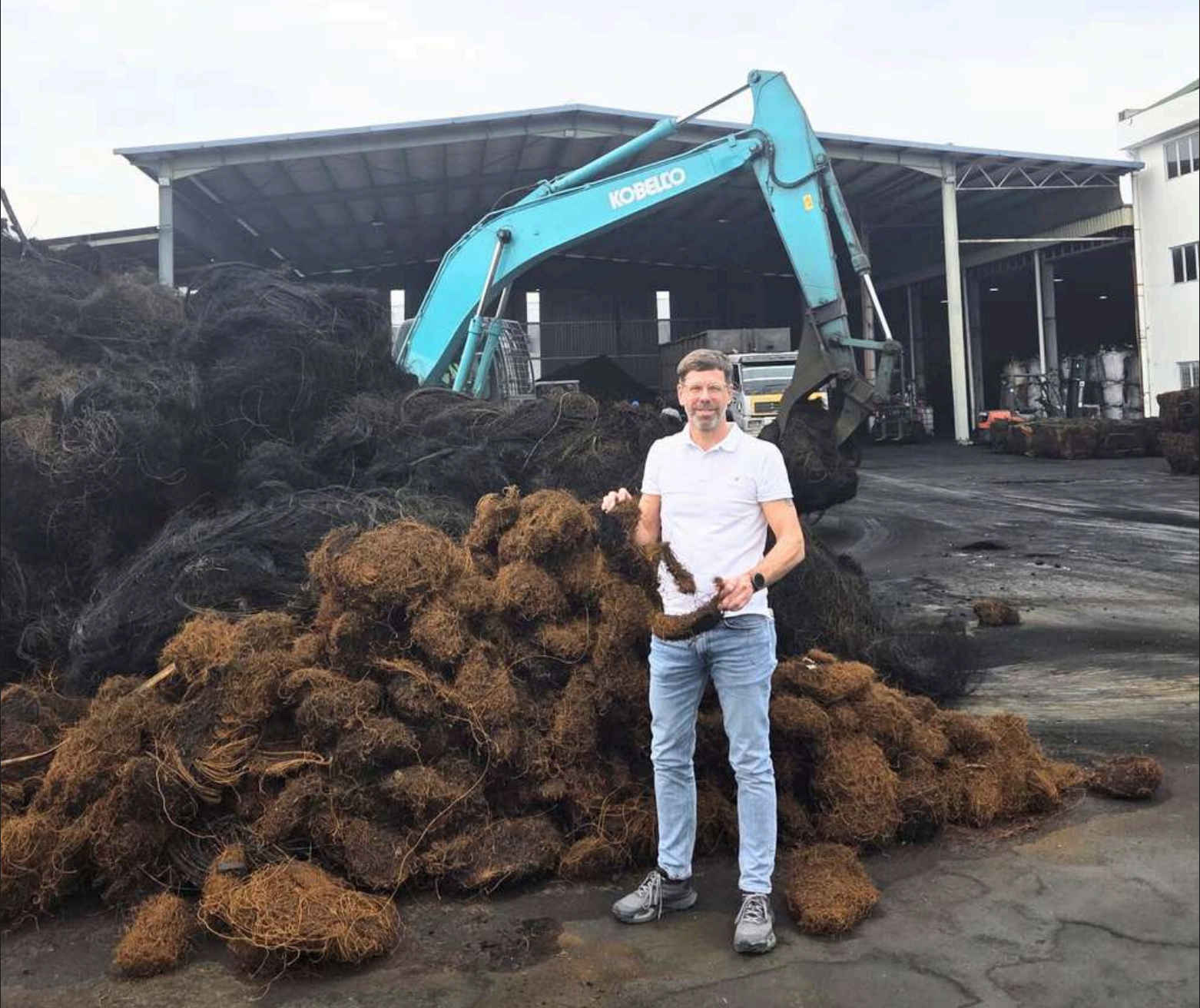
Reply: The biggest misconception I would like to correct is the idea that tyre recycling automatically produces high-value materials that are easy to sell. Neither rubber powder nor recovered carbon black should be seen as “black gold.” Both originate from waste streams, exhibit inherent variability in quality, and are not yet fully standardized across markets. Assuming that these materials will command premium prices without sustained effort in quality control, application development, and customer education has led to many unrealistic business cases.
A second, closely related misconception is that technology alone creates success. In reality, market creation and offtake development are far more critical than the recycling process itself. Even technically sound projects struggle if product specifications, volumes, and pricing are not aligned with real customer needs. Tyre recycling only becomes viable when operators think like material suppliers—working long-term with offtakers, investing in consistency and transparency, and accepting that value is built over time rather than unlocked instantly.
What excites you most about the future of circular rubber—and what still concerns you?
What excites me most is that circular rubber is finally moving from a “promising concept” to engineered value chains with genuine market pull. We now have ASTM frameworks for rCB, improving process control and product upgrading, and greater involvement from tyre companies, carbon black producers, and refiners. The discussion is shifting from pilot-stage claims to repeatable specifications, contracts, and scalable deployment.
What still concerns me is that the economics remain fragile in many regions. rCB and TPO pricing is volatile and often compressed by low-priced imports, while CAPEX, energy, permitting, and compliance costs in developed markets remain high. Until outputs become more standardized and tradable—and regulatory pathways (including REACH and traceability frameworks) become clearer—projects will continue to spend disproportionate time and capital on commercialization and certification before they can unlock truly predictable, long-term returns.
Circular rubber’s future is real and scalable, but only for those who build standards, transparency, and resilient economics.
Rubber Review: Issue 33 (February 16-22)
Weibold is an international consulting company specializing exclusively in end-of-life tire recycling and pyrolysis. Since 1999, we have helped companies grow and build profitable businesses.