

Tokai Carbon reports higher carbon black earnings despite weaker tire demand

Tokai Carbon reported higher sales and earnings in its carbon black business for the first nine months of 2026 despite weaker sales volumes caused by production adjustments among tire manufacturers. Segment net sales increased 16.6% year on year to JPY 129.4 billion, while operating income rose 6.4% to JPY 12.4 billion and EBITDA increased 20.2% to JPY 23.2 billion. Tokai Carbon said the decline in carbon black volumes was offset by the development of new customers, spot sales, favorable foreign exchange effects and the contribution of its expanded Thai operations, including the former Bridgestone carbon black business consolidated in the second half of 2025. The company is also progressing with the transition to its new 180,000-tonne-per-year carbon black plant in Thailand, where trial production began in 2025 and full relocation of production from the existing site is scheduled for the latter half of 2026. The results underline the contrasting conditions facing carbon black producers, with weaker tire production affecting demand while capacity expansion, customer development and regional restructuring continue to support earnings.
Carbon black sales rise 16.6% in first nine months
Tokai Carbon reported carbon black net sales of JPY 129.4 billion for January through September 2026, representing an increase of 16.6% compared with the same period of 2025.
Operating income for the segment increased 6.4% year on year to JPY 12.4 billion.
EBITDA rose more strongly, increasing 20.2% to JPY 23.2 billion from JPY 19.3 billion a year earlier.
Tire production adjustments reduce carbon black volumes
Tokai Carbon said sales volumes declined as tire manufacturers adjusted production levels.
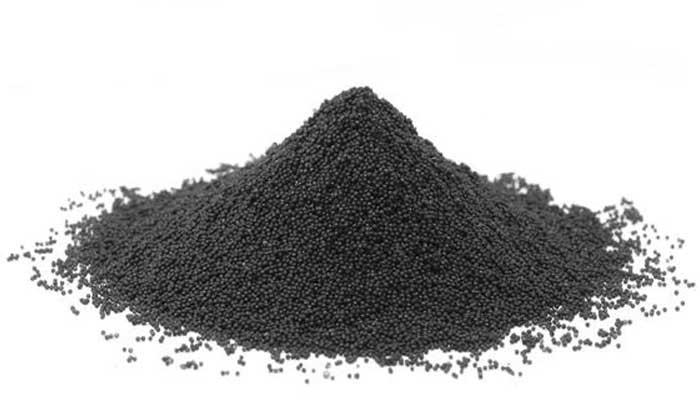
Carbon black demand is closely linked to tire manufacturing, with rubber-grade carbon black used as a reinforcing material to improve properties including durability, abrasion resistance and mechanical strength.
Lower tire production therefore continued to weigh on underlying carbon black volumes during the period.
New customers and spot sales offset weaker volumes
Despite lower overall volumes, Tokai Carbon said the impact was partly offset by new customer development and spot transactions.
The company has been expanding its customer base as it brings additional carbon black production capacity into operation and restructures its manufacturing footprint in Asia.
Thai operations contribute to revenue growth
The consolidation of Tokai Carbon’s expanded operations in Thailand made an important contribution to the year-on-year increase in sales and earnings.
The company incorporated the former Bridgestone carbon black operation in Thailand into its business during the second half of 2025, adding capacity and sales to its regional network.
The contribution from the acquired business supported the carbon black segment during a period of weaker tire production volumes.
Foreign exchange adds JPY 6.1 billion to sales
Tokai Carbon reported that foreign exchange movements contributed approximately JPY 6.1 billion to the increase in carbon black net sales.
Higher selling prices added another approximately JPY 4 billion.
These effects helped compensate for the negative impact of lower sales volumes.
Margins and foreign exchange support operating income
Operating income benefited from improvements in volumes and margins in selected areas as well as favorable foreign exchange movements.
These gains were partly offset by other costs, including higher depreciation associated with investment in the company’s new carbon black plant in Thailand.
New Thai carbon black plant adds 180,000 tonnes of capacity
Tokai Carbon has been developing a new carbon black production facility in Thailand with annual capacity of approximately 180,000 tonnes.
Construction began in 2023 as part of the company’s strategy to modernize and expand its production base in Southeast Asia.
Trial production started in June 2025.
Production relocation scheduled for latter half of 2026
Tokai Carbon previously said production from its existing Thai facility would be fully transferred to the new plant during the latter half of 2026.
The transition involves a period in which costs from the new facility, including depreciation, affect earnings before the benefits of the new manufacturing setup are fully realized.
Depreciation from new plant continues to affect earnings
The company said higher depreciation expenses associated with the start-up of the new Thai plant remained a negative factor during the first nine months of 2026.
However, these costs were offset by higher sales, improved margins, foreign exchange effects and the contribution of the expanded Thai business.
Results improve from weak first quarter
The nine-month performance represents an improvement from the first quarter of 2026, when Tokai Carbon reported lower sales and operating income in its carbon black business.
In the first quarter, carbon black sales declined 0.5% year on year to JPY 38.7 billion, while operating income fell 28.4% to JPY 3.2 billion.
At that stage, weaker tire production volumes and higher depreciation from the new Thai operation outweighed the contribution of the newly consolidated business.
Carbon black market remains exposed to tire production trends
Tokai Carbon’s results illustrate the continued sensitivity of rubber-grade carbon black demand to tire production levels.
Major carbon black producers have faced periods of weaker demand in several regions as tire manufacturers adjust inventories and production schedules.
At the same time, changes in regional supply, customer sourcing strategies and production footprints continue to influence market opportunities.
Tokai Carbon continues long-term carbon black investment
The Thai expansion is part of Tokai Carbon’s broader strategy to strengthen its carbon black business and improve the competitiveness of its production network.
The company has also invested in environmental improvements at its U.S. carbon black plants and has identified higher-performance and more sustainable carbon materials as areas for future development.
Company is also developing circular carbon black technology
Under its long-term Vision 2030 strategy, Tokai Carbon is developing technology to produce new eco Carbon Black from end-of-life tires.
The initiative reflects growing interest among carbon black and tire manufacturers in recovering carbon from waste tires and returning it to higher-value industrial applications.
Such developments could create additional links between conventional carbon black manufacturing, tire recycling and recovered carbon black markets over the longer term.
Thai expansion supports regional growth strategy
Tokai Carbon’s first-nine-month results show that expanded production and commercial activity in Thailand are helping offset weaker underlying tire demand.
The completion of the transition to the new Thai plant will be an important operational milestone as the company seeks to improve efficiency, strengthen its Asian supply network and support future carbon black sales growth.
Source: Tokai Carbon investor relations.
Weibold is an international consulting company specializing exclusively in end-of-life tire recycling and pyrolysis. Since 1999, we have helped companies grow and build profitable businesses.