TRA urges EU to tighten controls on end-of-life tire exports to non-OECD countries

The Tyre Recovery Association has urged the European Commission to strengthen rather than relax controls governing exports of end-of-life tires to non-OECD countries, raising particular concerns about proposed authorization for continued shipments to India after new EU Waste Shipment Regulation restrictions take effect in May 2027. The Commission’s draft framework would generally prohibit exports of certain non-hazardous waste to non-OECD countries unless individual countries have formally requested permission to continue receiving specific waste streams and demonstrated their ability to manage them in an environmentally sound manner. TRA argues that country-level assurances and documentary verification are insufficient for whole tire exports because shipments can be diverted after arrival to informal or poorly controlled treatment operations. The association is calling for the EU to consider an approach similar to Australia’s shred-only export model, under which waste tires must undergo mechanical processing before leaving the country, arguing that such a requirement could improve traceability, reduce supply to rudimentary batch pyrolysis operations and retain more secondary raw materials for European tire recycling and circular economy markets.
EU Waste Shipment Regulation tightens exports from May 2027
The European Commission published its draft list of non-OECD countries eligible to receive certain non-hazardous waste from the EU in September 2026 under Regulation (EU) 2024/1157. As a general principle, exports of covered waste streams to non-OECD countries will no longer be permitted from May 21, 2027.
An exception is available where a non-OECD country formally requests continued access and demonstrates that the waste can be managed in an environmentally sound manner. The Commission received requests from 32 countries and assessed the information supplied before preparing its draft authorization list.
India seeks continued access to EU waste tire shipments
India is among the non-OECD countries that submitted a request to continue importing specified non-hazardous waste from the EU. According to TRA, the draft rules would allow certain end-of-life tire shipments to India to continue beyond the May 2027 deadline if the applicable regulatory conditions are met.
The association does not oppose legitimate international tire recycling in principle but questions whether the proposed monitoring framework can reliably ensure that whole waste tires ultimately reach compliant processing facilities after entering the destination country.
TRA questions reliance on documentary verification
TRA argues that documentary evidence, facility declarations and periodic inspections cannot necessarily establish the final treatment route for every individual shipment once whole tires enter complex international supply chains.
The association points to experience in the United Kingdom, where enhanced verification measures were introduced for waste tire exports. TRA says early post-shipment compliance levels remained below 20%, which it views as evidence of the practical difficulty of policing whole tire exports through documentation and photographic evidence alone.
TRA raises concerns over informal tire pyrolysis
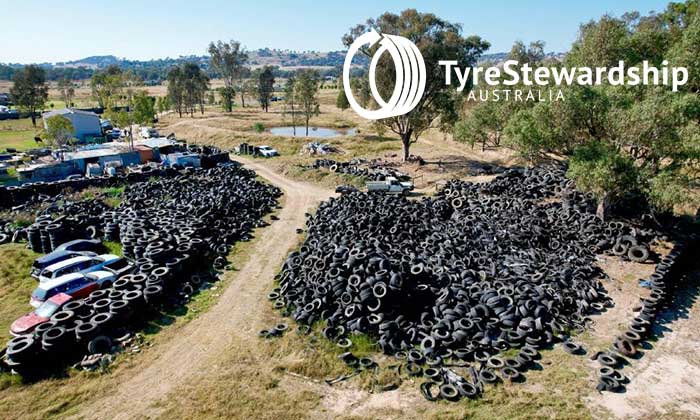
The association is particularly concerned about end-of-life tires being diverted into rudimentary batch pyrolysis operations that lack modern emissions controls and environmental management systems. TRA refers to concerns previously raised by India’s Automotive Tyre Manufacturers’ Association about imported tires entering informal processing channels rather than established recycling facilities.
Uncontrolled or poorly engineered tire pyrolysis can create significant environmental and health risks through air emissions, contaminated residues and inadequate management of liquid and solid products. These conditions differ substantially from industrial tire pyrolysis plants designed around controlled processing, emissions treatment, product quality and regulatory compliance.
More than 600,000 tonnes of EU tires reportedly exported to India
TRA cites trade data indicating that EU Member States exported more than 605,000 tonnes of end-of-life tires to India during 2025. Germany was reported as the largest source at approximately 93,200 tonnes, followed by Italy at 90,600 tonnes, France at 74,500 tonnes, Belgium at 72,000 tonnes and Ireland at 58,700 tonnes.
The association argues that volumes of this scale make European waste tire exports an important part of the feedstock market for tire processing in India and therefore justify particularly strong controls on traceability and final treatment.
Commission says authorization depends on sustainable waste management
The European Commission’s proposed system is designed to reverse the assumption that non-hazardous waste can automatically be exported to non-OECD countries. Instead, recipient countries must actively request authorization and provide evidence that imported material can be treated in an environmentally sound manner.
The Commission says the new Waste Shipment Regulation is intended to ensure that the EU takes greater responsibility for its own waste and does not export waste management problems to countries with weaker treatment capacity or enforcement.
First authorization list expected by end of 2026
The Commission intends to establish the first list of authorized non-OECD countries by the end of 2026. The list will specify which waste streams individual countries may continue to receive from the EU.
Countries not included on the list will generally be prohibited from receiving the relevant EU waste streams from May 21, 2027. The authorization list will subsequently be reviewed and updated at least every two years.
TRA proposes Australian-style shred-only exports
Rather than relying primarily on post-shipment verification, TRA is asking European policymakers to consider requiring end-of-life tires to be mechanically processed before export. The association points to Australia’s restrictions on exports of whole baled tires as a possible model.
A shred-only requirement would not necessarily prevent international trade in tire-derived materials, but it would change the physical form of the exported feedstock and require some initial tire recycling activity to occur domestically before shipment.
Association argues shredding could reduce supply to batch reactors
TRA argues that whole tires are particularly suitable as feedstock for rudimentary batch pyrolysis operations and that mandatory shredding could therefore make it more difficult for such facilities to rely on imported European tires.
The association also believes domestic preprocessing could improve material traceability and create additional opportunities for separation, grading and recycling before materials enter international markets.
Export debate also affects European recycling capacity
TRA frames the issue not only as an overseas environmental concern but also as a European circular economy challenge. Large exports of whole end-of-life tires remove potential feedstock from domestic mechanical recycling, recovered carbon black, tire pyrolysis and other circular material recovery operations.
For emerging chemical recycling technologies in particular, predictable access to end-of-life tire feedstock can be important for plant utilization, financing and long-term product offtake agreements.
Secondary raw materials become strategic consideration
End-of-life tires contain rubber, steel, carbon and hydrocarbon resources that can be recovered through a range of technologies. Keeping a greater proportion of these materials within European industrial supply chains could support recycled rubber production, recovered carbon black, tire-derived oil and other secondary raw material markets.
TRA therefore argues that export policy should be considered alongside Europe’s wider objectives for circularity, resource resilience and development of domestic recycling infrastructure.
EU faces balance between international trade and environmental protection
The Commission’s authorization process is intended to distinguish countries capable of managing imported waste responsibly from those that cannot demonstrate sufficient environmental controls. TRA’s intervention argues that the same assessment should also consider how effectively individual shipments can be monitored after arrival and whether particular waste forms create an elevated risk of diversion.
The final rules will therefore influence both international end-of-life tire trade and the availability of feedstock for European tire recycling. As the May 2027 deadline approaches, the central policy question is whether country-level authorization and monitoring provide sufficient safeguards or whether additional measures, such as mandatory preprocessing, are needed for waste tire exports.
Original reporting by Tyre & Rubber Recycling. European Commission consultation information is available through the Have Your Say portal.
Weibold is an international consulting company specializing exclusively in end-of-life tire recycling and pyrolysis. Since 1999, we have helped companies grow and build profitable businesses.