Weibold Academy: ISCC PLUS gets operational – what the new mass-balance guidance means for ELT pyrolysis

Weibold Academy article series discusses periodically the practical developments and scientific research findings in the end-of-life tire (ELT) recycling and pyrolysis industry.
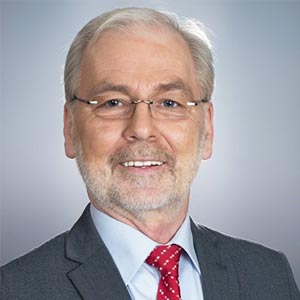
These articles are reviews by Claus Lamer – the senior pyrolysis consultant at Weibold. The reviews aim to give industry entrepreneurs, project initiators, investors, and the public a better insight into a rapidly growing circular economy. At the same time, this article series should stimulate discussion.
For completeness, we would like to emphasize that these articles are no legal advice from Weibold or the author. Please refer to the responsible authorities and specialist lawyers for legally binding statements.
Abstract
Over the past year, the tire pyrolysis industry has absorbed several important changes in sustainability certification.
In February 2026, Weibold examined how ISCC EU Mass Balance Guidance Version 1.2 tightened attribute assignment for mixed-origin materials such as end-of-life tires. In May, we discussed the increasingly relevant RCF pathway for the fossil fraction of ELTs. And in August, we looked more broadly at how these and other regulatory developments were changing the commercial identity of tire pyrolysis oil.
Now another piece of the certification architecture deserves attention.
On 22 September 2026, ISCC formally released ISCC PLUS Mass Balance Guidance Version 1.1. The document does not replace ISCC EU and does not create a new regulatory status for tire pyrolysis oil. But it provides substantially more detail on managing certified attributes in voluntary circular and bio-based supply chains.
For ELT pyrolysis companies and, importantly, their downstream customers, the message is becoming clear:
Mass balance is no longer just bookkeeping. It is increasingly linked to process design, product routing and the commercial claims that can ultimately be made.
Three developments brought us here
The latest guidance is easier to understand in the context of what has happened during 2026.
In February 2026, our Academy article “TPO’s mass balance reset – ISCC EU 1.2 tightens attribute assignment” examined the consequences of the revised ISCC EU mass-balance rules for mixed fossil and biogenic feedstocks such as end-of-life tires.
Then, in May 2026, “ISCC-EU opens a new door for TPO” discussed an important development for the fossil fraction of ELTs: its clearer recognition as a potential feedstock within the recycled carbon fuel framework.
Finally, our August 2026 article “TPO’s new era – what changed in 14 months” brought these developments together with RED III, end-of-waste developments and the growing importance of traceability, GHG accounting and certification for TPO producers and offtakers.
The new ISCC PLUS guidance adds another layer to this story.
ISCC EU and ISCC PLUS: related systems, different purposes
One distinction deserves to be made at the outset.
ISCC EU and ISCC PLUS are not interchangeable.
ISCC EU is closely connected to the regulatory requirements of the EU Renewable Energy Directive (EU RED) and therefore matters particularly for biofuels, recycled carbon fuels, and other regulated energy pathways.
ISCC PLUS is a voluntary certification system used more broadly for circular and bio-based materials and products.
For tire pyrolysis companies, this distinction can matter commercially. TPO may enter a refinery or fuel pathway under one framework, while other tire-derived products or downstream chemical applications may be handled under another.
The new ISCC PLUS guidance makes the interface between these systems considerably clearer.
Where the same site holds both ISCC EU and ISCC PLUS certification, the respective bookkeeping must remain strictly separated. Each quantity can be accounted for only once. At the same time, material originating in an ISCC EU-certified supply chain can, under defined conditions, subsequently enter ISCC PLUS bookkeeping.
The final guidance also provides an explicit example in which co-products are initially accounted for under ISCC EU and are subsequently transferred into ISCC PLUS before the PLUS attribution rules are applied.
For integrated refinery and chemical value chains, that clarification matters.
An RCF classification does not simply travel with the molecule
There is another clarification of particular relevance to TPO.
ISCC PLUS can accept material originating from an ISCC EU-certified supply chain. But certain regulatory designations used under ISCC EU — including “RCF”, “RFNBO” and “co-processed” — cannot simply be transferred as ISCC PLUS product classifications.
ISCC explains why: these prefixes originate from specific legislative requirements, primarily under the Renewable Energy Directive, and those requirements are not verified through an ISCC PLUS audit. That distinction is commercially important.
The same physical material may enter different downstream markets, but its certification identity and associated claims depend on the certification system and requirements actually applied.
For ELT pyrolysis producers, it is therefore increasingly insufficient to ask:
“Is our TPO ISCC certified?”
The more relevant question is:
“Certified under which scheme, for which product route, and for which downstream claim?”
Free Attribution remains flexible — but it is not unrestricted
ISCC PLUS continues to provide greater flexibility than some regulatory certification frameworks.
Under the Credit Method, Free Attribution allows sustainability characteristics associated with certified inputs to be assigned to one or several outputs, subject to defined rules.
But “free” does not mean arbitrary.
The new guidance emphasizes chemical connectivity. There must be a demonstrated link between the certified input and the output receiving the sustainability characteristic. ISCC requires both a theoretical chemical relationship and practical process feasibility.
The wider mass-balance guardrails reinforce this principle.
Among other requirements:
- certified credits cannot exceed the physical output actually produced;
- losses must be included;
- calculations must rely on actual operational data; and
- mass balance must be managed at site level rather than across a company as a whole.
For ELT pyrolysis companies, some of these requirements will matter directly at the pyrolysis plant.
Others may become even more important one or two processing steps downstream — for example, where TPO enters a refinery, cracker or chemical conversion process.
That means an offtaker's mass-balance architecture can increasingly influence the value of the pyrolysis producer's feedstock.
A significant date: 1 January 2027
One provision deserves particular attention.
From 1 January 2027, the reflection of input characteristics becomes a mandatory guardrail when Free Attribution is used.
Compensation of input characteristics remains possible, but only if the relevant conditions are fulfilled.
One of those conditions is that the materials are “similar-in-nature.”
Under the final guidance, the economic values of the certified and non-certified inputs concerned must be within a factor of five. In addition, the materials must satisfy the applicable material-category or chemical-convertibility criteria.
This matters because the consultation draft proposed an economic-value range of up to a factor of ten. Consultation comments specifically questioned whether such a broad range was appropriate; the final guidance narrowed the criterion to five.
This illustrates something broader about the development of mass balance:
flexibility is being retained, but the conditions under which that flexibility may be used are becoming more explicit.
Why this matters even if the pyrolysis plant is not doing the attribution
At first sight, much of this may appear to be a downstream issue.
A pyrolysis producer converts ELTs into TPO, recovered carbon black (rCB), gas, and steel. A refinery or chemical company then converts TPO into further products.
Why should the pyrolysis company care how those downstream products are attributed?
Because the downstream certification route can affect what the customer is prepared to pay for the feedstock.
A refinery or chemical company may value TPO differently depending on whether its certified characteristics can be incorporated into the intended product pathway and whether the relevant claims survive downstream conversion.
Certification therefore increasingly becomes part of offtake qualification.
Alongside questions about sulfur, metals, stability, distillation and contaminants, future TPO qualification discussions may increasingly include:
- Which ISCC scheme applies?
- Which sustainability characteristics arrive with the TPO?
- Which mass-balance approach will the receiving process use?
- Can chemical connectivity be demonstrated?
- How are conversion losses accounted for?
- Which claims can legitimately leave the downstream plant?
Those are no longer purely sustainability-department questions.
They can influence the commercial value of the oil.
One certified site does not necessarily mean one mass-balance method
The new guidance also confirms that different mass-balance approaches may be used for different processes within the same certified site, provided the processes are clearly distinguished and separately represented in the bookkeeping.
This is particularly relevant as pyrolysis projects become more integrated.
A future ELT recycling site may include not only pyrolysis but also TPO distillation or upgrading, rCB processing, gas utilization and other downstream operations.
Likewise, an offtaker may operate several conversion processes within one industrial complex.
The certification question therefore increasingly becomes process-specific:
feedstock → process → product → certification scheme → attribution method → permitted claim
This is considerably more sophisticated than simply obtaining an ISCC certificate for the site.
One important issue remains unfinished
Not every question has been answered yet.
The guidance includes Fuel-Use Excluded Attribution, which distinguishes outputs intended for fuel or energy use from non-fuel material outputs.
However, ISCC explicitly states that further details on the application of this approach will follow in future versions of the guidance.
For TPO value chains — where the same hydrocarbon feedstock may ultimately enter either fuel or chemical applications — that could become an important development.
For now, however, treat it as an area to monitor rather than the basis for firm commercial assumptions.
ISCC itself describes the new Mass Balance Guidance as an active document and indicates that it expects further updates, potentially on an annual basis. ISCC formally released Version 1.1 on 22 September 2026 after public consultation and more than 200 stakeholder comments.
The bigger picture: certification is moving into project design
The latest ISCC PLUS guidance does not suddenly change the chemistry or economics of tire pyrolysis. Its significance is more structural.
Certification is becoming increasingly intertwined with the physical supply chain.
For an ELT pyrolysis project, the relevant questions therefore need to be asked earlier:
- Which market will the product enter?
- Which certification scheme applies?
- Which sustainability characteristics can be transferred?
- How will the downstream process account for them?
- And can the physical plant and its operating data support those claims?
This aligns with the broader development we described in our August Academy article: the TPO industry is moving from a market concerned mainly with whether oil can technically be produced and sold to one in which quality, origin, carbon accounting, certification, and legal status must increasingly work together.
For the next generation of ELT pyrolysis projects, being “ISCC certified” may therefore be only the starting point.
The more valuable capability may be designing a certification architecture that fits the plant, the product and the customer.
Sources and further reading
The principal source for this article is the ISCC PLUS Mass Balance Guidance Document, Version 1.1, valid from 21 September 2026. ISCC-PLUS-Guidance-Document-Mas…
ISCC's official announcement of the final guidance: System Updates - ISCC System
ISCC's public-consultation page, including consultation feedback on the draft PLUS Mass Balance Guidance and the September 2026 consultation on the ISCC PLUS GHG Add-on: ISCC Public Consultation
Previous Weibold Academy coverage:
- February 2026 – TPO’s mass balance reset;
- May 2026 – ISCC-EU opens a new door for TPO;
- August 2026 – TPO’s new era – what changed in 14 months.
For completeness, this article provides an industry overview and does not constitute legal or certification advice. The applicability of individual ISCC requirements should be confirmed for the respective facility, supply chain, product and intended use with the relevant certification body and, where appropriate, competent authorities and specialist advisers.
Weibold is an international consulting company specializing exclusively in end-of-life tire recycling and pyrolysis. Since 1999, we have helped companies grow and build profitable businesses.
Weibold is an international consulting company specializing exclusively in end-of-life tire recycling and pyrolysis. Since 1999, we have helped companies grow and build profitable businesses.