

Kentucky reports 77.4% end-of-life tire recycling rate in 2025

Kentucky reported a statewide waste tire recycling rate of 77.4% for fiscal year 2025, slightly below the 78.2% reported in 2024 and close to the most recent US national average cited in the state’s Waste Tire Program Annual Report. The Kentucky Energy and Environment Cabinet said residents generated an estimated 59,100 tons of waste tires in 2025, equivalent to about 4.2 million passenger tire equivalents. The Commonwealth and county governments managed about 15.1% of that total, while the private sector accounted for the remaining 84.9%. The report highlights the continuing role of the Waste Tire Trust Fund in collection events, county grants, crumb rubber and tire-derived product grants, rubber modified asphalt projects and market development, while also warning that tire-derived fuel markets face pressure from reduced solid fuel use, low-cost natural gas and broader changes in manufacturing and energy markets.
Waste Tire Trust Fund supports Kentucky program
The Waste Tire Trust Fund is used by the Cabinet to support waste tire management activities across Kentucky. These include waste tire collection events, direct grants to counties, crumb rubber and tire-derived product grants, rubber modified asphalt grants and remediation of waste tire dump sites.
The program traces back to legislation enacted in 1990, when Kentucky established the Waste Tire Control Program and a tire fee to help eliminate existing stockpiles and prevent new ones. The fee was later retained in revised legislation and increased from $1 to $2 in 2018. In 2024, lawmakers extended statutory authorization for the program through June 30, 2026.
Collection events removed 884,452 passenger tire equivalents
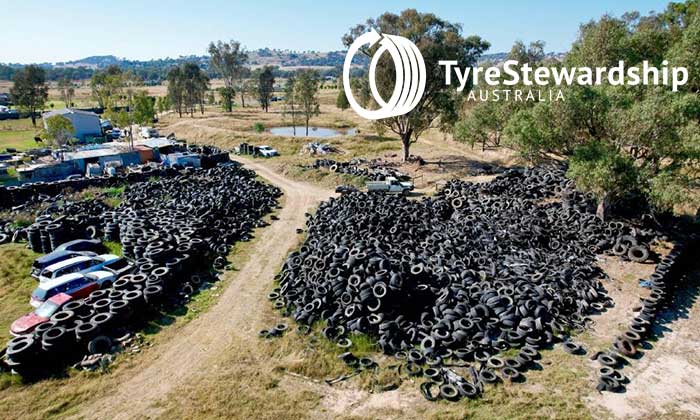
During fiscal year 2025, Kentucky conducted Waste Tire Collection Events in the Bluegrass, Lincoln Trail and Lake Cumberland Area Development Districts. The Cabinet also remediated multiple unauthorized waste tire disposal sites during the reporting period.
Together, these events and cleanups collected 884,452 passenger tire equivalents at a total program cost of $3,058,851. Since the program began, Waste Tire Collection Events have removed and properly managed approximately 29.2 million passenger tire equivalents at a cumulative cost of about $33.6 million.
County grants supported local tire management
Kentucky awarded $380,000 in fiscal year 2025 direct tire grants to 95 counties. These grants help counties pay for transportation and recycling or disposal of waste tires.
Counties returned $55,028.85 in unspent state grant funds but spent $63,051.16 of their own money on waste tire remediation. In total, state and county funding of $443,051.16 was used to dispose of or recycle 205,731 passenger tire equivalents, at an average cost of $2.15 per passenger tire equivalent.
Crumb rubber and tire-derived products receive grant support
The state’s crumb rubber and tire-derived product grant program supports projects using recycled Kentucky tires. Eligible uses include landscaping projects, poured-in-place playgrounds, walking trails, horse trailer and stall mats, tree wells, picnic tables, benches and other products made from recycled tire materials.
Since 2004, Kentucky has awarded 827 crumb rubber and tire-derived product grants totaling more than $13.3 million, primarily to schools and municipalities. In fiscal year 2025, the Cabinet awarded $1.4 million through this grant program.
Rubber modified asphalt projects continue
Kentucky’s rubber modified asphalt grants reimburse county and urban-county governments for paving road sections with asphalt modified by crumb rubber from recycled waste tires. The program is designed to encourage recycling of Kentucky tires, demonstrate the benefits of rubber modified asphalt, collect performance data and give local governments and paving contractors experience with the material.
Since the rubber modified asphalt grant program began, the Waste Tire Trust Fund has supported 57 road projects totaling $5,581,068.69. During fiscal year 2025, $556,853 was spent on four grant-funded projects. The report says all 2024 rubber modified asphalt projects passed tests against Kentucky Transportation Cabinet standard specifications, including compaction density, asphalt content, voids, rutting and performance grade.
Ground rubber becomes Kentucky’s largest tire market
Kentucky’s largest waste tire market in 2025 was mulch or ground rubber, accounting for 29.5% of the market. Applications include landscape mulch, playground cushioning, synthetic turf infill and rubber modified asphalt.
Tire-derived fuel accounted for 25.1%, resale for 5.9%, civil engineering applications for 1.4%, byproducts for 15.5% and disposal for 22.6%. The report said landfill disposal of Kentucky-generated tires increased slightly from 21.8% in 2024 to 22.6% in 2025 because of lower cumulative markets.
Tire-derived fuel market remains important but pressured
The report says tire-derived fuel remains one of Kentucky’s largest end uses for waste tires and is expected to remain significant for the foreseeable future. TDF applications include use in paper mill boilers, cement kilns and utilities, where processed tires can supplement energy needs and displace a small share of coal use.
At the same time, the Cabinet warned that TDF markets are being affected by reduced use of solid fuels, competition from low-cost natural gas, international manufacturing competition and environmental regulations affecting coal and other solid fuels. The report said continued diversification of markets is critical to maintaining a high rate of constructive use for waste tire resources.
Market development focuses on higher-value outlets
The Cabinet said ground tire rubber is considered a higher-end market than tire-derived fuel because more of the original tire’s material properties are carried into new products rather than being used once for energy. The report said additional market development for tire-derived aggregate in highway, landfill, foundation backfill and similar civil engineering projects could help diversify markets and offset future declines in TDF demand.
Kentucky’s ground rubber and mulch production has grown from essentially no market in 1998 to 1.7 million passenger tire equivalents in 2025. The report also points to potential future opportunities in molded automotive parts, noting Kentucky’s strong automotive manufacturing base.
Fund extension identified as important
The report warns that if the new tire fee is not extended, program funds would no longer be available to Kentucky businesses involved in tire processing, and remediation work would be negatively affected. Potential impacts include the loss of the $4,000 annual county grant, greater impacts from abandoned tires in rural areas, reduced ability to remediate tire piles and the likely end of market development activity.
Kentucky’s 2025 Waste Tire Program Annual Report presents a system that has built significant tire recycling and recovery infrastructure, but still depends on stable funding, market diversification and continued public support. The report indicates that the state’s future waste tire strategy will need to balance established tire-derived fuel markets with growth in ground rubber, rubber modified asphalt, tire-derived aggregate and other circular economy applications.
Article source: Kentucky Energy and Environment Cabinet.
Weibold is an international consulting company specializing exclusively in end-of-life tire recycling and pyrolysis. Since 1999, we have helped companies grow and build profitable businesses.