

Michigan expands use of end-of-life tires to build longer-lasting roads

Michigan is increasingly turning scrap tires into road-building materials, using recycled rubber in asphalt and chip seal applications to improve durability while creating new markets for millions of end-of-life tires generated each year.
The initiative, led by researchers at Michigan Technological University in partnership with the Michigan Department of Environment, Great Lakes and Energy (EGLE), is demonstrating how recycled tire rubber can help roads better withstand the state's harsh freeze-thaw cycles.
Turning a waste problem into a road-building solution
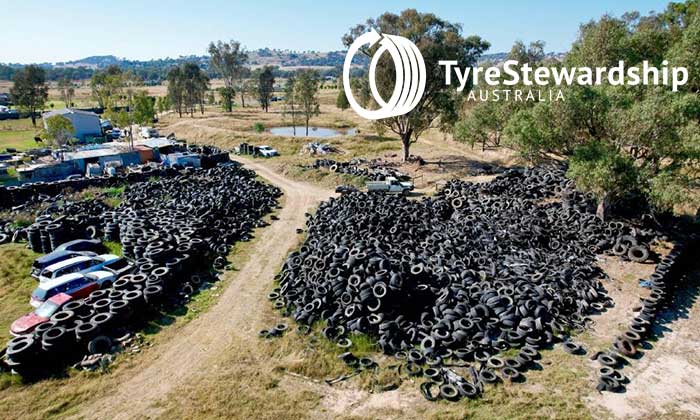
Michigan generates nearly 10 million scrap tires annually, creating significant environmental and disposal challenges. Historically, large volumes of these tires were used as tire-derived fuel, but policy changes introduced in 2024 sharply reduced this outlet, leaving millions of additional tires in need of alternative end markets.
According to EGLE, between 2.5 million and 3.5 million tires that previously went to energy recovery now require new recycling pathways.
Researchers and road agencies increasingly see rubber-modified asphalt as one of the most promising solutions.
Rubber improves road flexibility and durability
Michigan Technological University's Transportation Institute, led by Professor Zhanping You, has spent nearly two decades developing rubber-enhanced asphalt technologies.
The process incorporates finely ground tire rubber into asphalt mixtures and chip seal applications, improving pavement flexibility and resistance to cracking.
By allowing roads to expand and contract more effectively during temperature fluctuations, the recycled rubber helps reduce damage caused by Michigan's severe winter conditions.
"The rubber gives the pavement some flexibility so we don't get those transverse cracks or cracks across the road that a lot of times are cold-weather cracking," said Lance Malburg, engineer with the Dickinson County Road Commission.
Projects show encouraging long-term performance
More than 20 county road commissions across Michigan have participated in pilot projects using rubber-modified asphalt, with approximately 30 road projects completed to date.
In Bay County, road officials reported that rubber-enhanced chip seal applied to a severely deteriorated roadway continues to perform well after five years of service.
Engineers noted that the rubberized surface remains flexible and resistant to cracking, significantly outperforming conventional chip seal treatments.
In Dickinson County, where winter temperatures frequently fall below -20°F (-29°C), road sections constructed using rubber-modified asphalt in 2021 reportedly continue to perform exceptionally well.
Advances in tire recycling technology support adoption
Improvements in tire processing technology have played a key role in expanding the use of recycled rubber in roads.
Modern recycling facilities can now produce micronized rubber powders with particle sizes comparable to powdered sugar. These fine rubber particles blend more effectively with asphalt binders, creating stronger and more flexible pavement systems.
The technology also enables recyclers to efficiently remove steel and textile fibers from scrap tires before processing the rubber into high-value applications.
Statewide specifications under development
To support broader adoption, Michigan Tech, EGLE, the Michigan Department of Transportation and the Michigan County Road Association are developing standardized specifications for rubber-modified asphalt and chip seal systems.
The goal is to provide road agencies across the state with approved formulations and performance standards that can be implemented without requiring each municipality to develop its own specifications.
Researchers are tailoring formulations to local conditions, accounting for factors such as climate, traffic volumes and pavement requirements.
Growing market for recycled tire materials
The expansion of rubberized asphalt projects reflects a broader effort to create sustainable end markets for recycled tire materials.
Road construction is increasingly viewed as one of the highest-volume applications for recycled rubber, capable of consuming substantial quantities of end-of-life tires while delivering measurable infrastructure benefits.
As more field data becomes available and standardized specifications are finalized, Michigan's experience could serve as a model for other regions seeking to combine tire recycling objectives with infrastructure improvement programs.
For tire recyclers, road agencies and policymakers, the growing success of rubber-modified asphalt demonstrates how end-of-life tires can be transformed from a disposal challenge into a valuable resource supporting more durable and sustainable transportation infrastructure.
Article source: Detroit Free Press.
Weibold is an international consulting company specializing exclusively in end-of-life tire recycling and pyrolysis. Since 1999, we have helped companies grow and build profitable businesses.