

Pliteq's CEO says tariffs expose urgent need for U.S. recycling reform

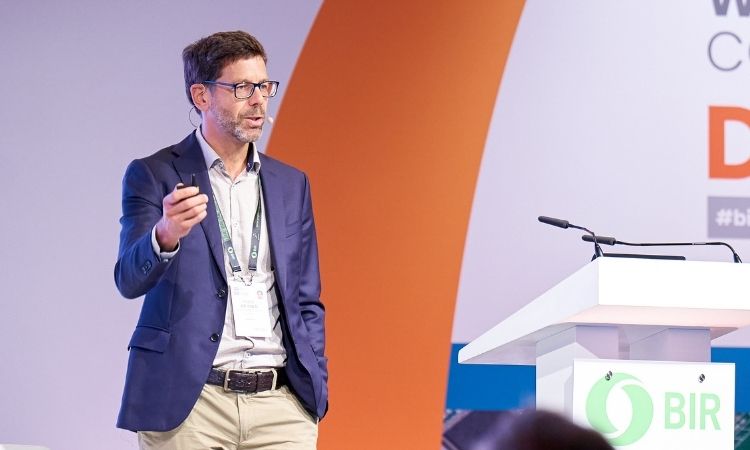
Paul Downey, Founder and CEO of Pliteq, recently spoke with Recycling Today about the critical need for a reset on global supply chains and why tariffs are exposing their current fragility.
Paul Downey argues that US tariffs are pushing North American businesses toward more localized supply chains, creating an opening for the recycling sector to become a stronger source of domestic raw materials. The article says manufacturers are under pressure from higher raw material costs, while retailers are managing increased import costs, and that these conditions could make recycled materials more strategically important if the United States improves its recycling policy framework. The commentary frames recycling not only as an environmental activity but as supply chain infrastructure, arguing that domestic material recovery could help manufacturers reduce exposure to global trade disruption, support reshoring and build more resilient industrial supply chains. However, it also warns that without reform, the United States could miss the opportunity to turn recycling into a competitive advantage.
Tariffs are changing supply chain calculations
The commentary says the continued use of tariffs is forcing companies to reconsider how and where they source materials. As imported goods and raw materials become more expensive, businesses may have stronger incentives to look for domestic inputs, shorter supply chains and more predictable sources of supply.
For recyclers, this creates a potential opportunity. Materials recovered from domestic waste streams can function as local feedstock for manufacturing, reducing dependence on imports and supporting a more circular economy. This is especially relevant for metals, plastics, rubber, paper, glass and other materials that can be collected, processed and returned to industrial use.
Recycling positioned as supply chain infrastructure
The article argues that recycling should be treated as part of national supply chain strategy. In this view, recyclers are not only waste handlers but also producers of secondary raw materials that can support domestic manufacturing.
If reshoring accelerates, manufacturers will need reliable access to feedstock. Domestic recycling systems could help meet part of that need, but only if collection, sorting, processing and end-market infrastructure are strong enough to deliver consistent quality and volume.
Policy reform seen as necessary
The commentary warns that tariffs alone will not create a stronger circular economy. To capitalize on reshoring, the United States would need recycling reforms that improve material quality, strengthen end markets, support investment and make recovered materials easier to use in domestic manufacturing.
Possible areas for reform include better collection systems, clearer recycling standards, stronger domestic procurement policies, improved data, incentives for recycled content and support for processing infrastructure. Without such measures, domestic recyclers may struggle to supply manufacturers at the scale and quality needed.
Canada presented as a potential model
The article says the United States could benefit from following Canada’s lead. Canada has developed producer responsibility and recycling frameworks in several material sectors, including end-of-life tire management, where organized collection, recycling and market development systems have helped move used tires into productive recovery routes.
For US policymakers, the comparison suggests that recycling reform may require coordinated responsibility across producers, recyclers, manufacturers, regulators and end users. Stronger policy alignment could help turn waste streams into dependable domestic resources.
Opportunity extends to tire and rubber recycling
The reshoring argument is relevant to tire recycling and rubber recycling because end-of-life tires can supply materials for crumb rubber, rubberized asphalt, molded products, tire-derived fuel, recovered carbon black and other applications. These outlets can support domestic circular economy markets when demand, regulation and procurement policies are aligned.
For the tire and rubber sector, stronger recycling reform could help increase use of recovered rubber and other tire-derived materials in roads, manufacturing and infrastructure. This would reduce disposal pressure while creating additional domestic sources of industrial material.
Domestic markets remain the critical link
The commentary’s central message is that recycling can support reshoring only if there is reliable domestic demand for recovered materials. Collection alone is not enough. Recycled materials must have clear pathways into manufacturing, construction, infrastructure and other end markets.
As tariffs reshape sourcing decisions, the United States has an opportunity to treat recycling as part of industrial resilience. The article argues that without reforms to strengthen recycling systems and end markets, the country may fail to capture the economic and supply chain benefits of a more local, circular materials economy.
To read more, please proceed to the original article by Recycling Today.
Weibold is an international consulting company specializing exclusively in end-of-life tire recycling and pyrolysis. Since 1999, we have helped companies grow and build profitable businesses.