
Scandinavian Enviro Systems restructuring process to continue after court ruling
According to the company, the court has now determined that the reorganization should proceed as planned.
for your query 'sustainability'
Weibold stores an archive of hundreds of articles dedicated to the industry of tire recycling and pyrolysis. Search for specific news, events, used equipment ads and consulting services related to end-of-life tire recycling and pyrolysis.
Sponsored
According to the company, the court has now determined that the reorganization should proceed as planned.
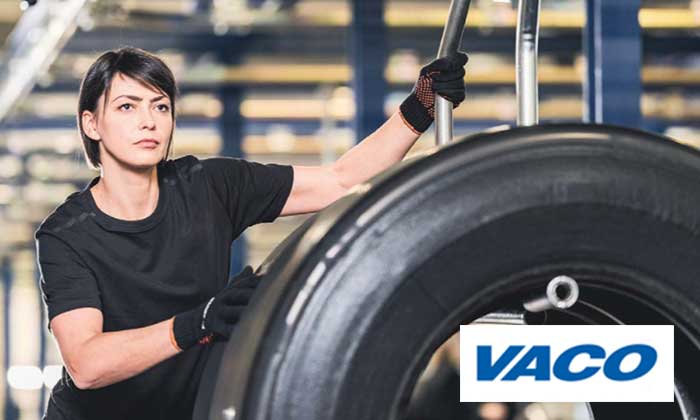
Extending the life of commercial vehicle tires (for truck and bus) through tire retreading offers unprecedented opportunities. Sustainability, economical use of raw materials and the circular economy should be reasons for both business and government to consider tires retreading. Nevertheless, the market share of retreaded commercial vehicle tires in the Netherlands is considerably lower than in neighboring countries. Currently, approximately 20% of passenger and freight transport in the Netherlands runs on retreaded tires. In Germany this is 28%, in France 35% and in the US even half of them are on retreaded tires. So in the Netherlands there is still a lot to gain.
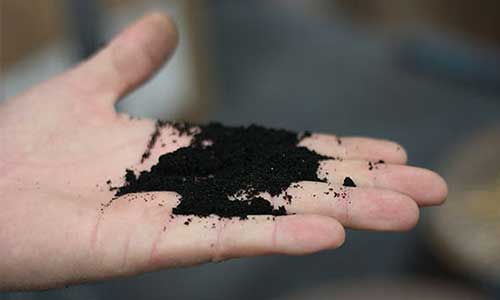
An award-winning innovation method for tire recycling is crumb rubber devulcanization. The original process was developed by a scholar whose innovation was commercialized by Tyromer Inc. – the Canadian company founded by a national university. What makes devulcanization stand out is the fact that it does not require the application of any chemical solvents. Moreover, Tyromer’s process helps reuse waste tire rubber in new tires and in retreads – this was hardly possible before.

Tyre Stewardship Australia announces the release of two new reports exploring the evolving challenges and opportunities facing the tyre industry in Australia and globally. The reports offer actionable insights into global regulatory trends, innovative and changing tyre designs, and the growing impacts to local tyre recovery from the transition to electric vehicles (EVs).
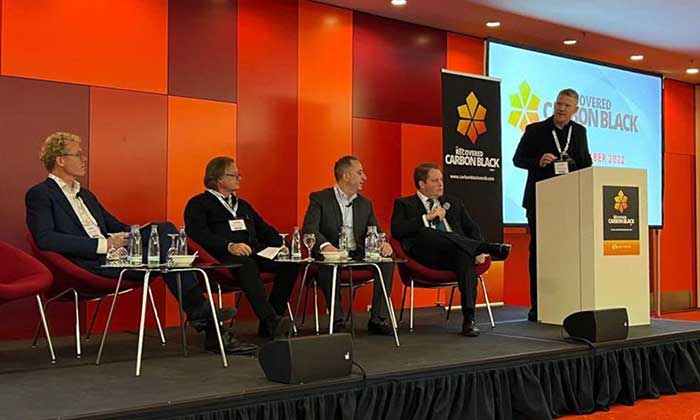
In a joint appeal, leading tire manufacturers Michelin and Bridgestone believe that there is the potential for an annual total market of up to 1 million tons of recovered carbon black by 2030. The appeal was made last week at the Smithers Recovered Carbon Black Conference in Berlin, which Enviro attended and where the company’s chairman, Alf Blomqvist, was one of the speakers. Both Michelin and Bridgestone have set a goal that by 2050, their tires will consist of 100% sustainable materials. At their appearance in Berlin, both companies stated that the capacity to produce recovered carbon black that meets manufacturer specifications is small compared to the total carbon black market.
Tire and Rubber Association of Canada (TRAC) announces the addition of Tyromer Inc. as a new member. Headquartered in Toronto, Ontario, Tyromer’s proprietary rubber devulcanization technology converts scrap tire rubber crumb into TDP (Tire-Derived Polymer) that has a broad applicability and can be incorporated into most new rubber products including tires, retreads, conveyor belts, and general rubber goods. “Tyromer and its technology have been on TRAC’s radar since the early stages of the organization’s efforts for commercialization, and we knew it was only a matter of time before TRAC would be able to welcome this company with its unique Canadian technology to TRAC ranks,” says Carol Hochu, President and CEO of TRAC. “Tyromer is a pioneer in the field of rubber devulcanization, and we look forward to a cooperative and lasting relationship that will be mutually beneficial.”
Michelin and Bridgestone publicly announced their collaboration on developing the recovered carbon black on November 22 at the Smithers rCB Conference in Amsterdam. Sander Vermeulen of Michelin and Jake Ronsholt of Bridgestone took to the stage to discuss the role of pyrolysis in the tire recycling industry as well as the opportunities it presents. Vermeulen was apparent that pyrolysis had the potential to reduce the amount of fossil fuel utilized for virgin Carbon Black used in tires, but there were obstacles. Vermeulen was apparent that pyrolysis had the potential to reduce the amount of fossil fuel utilized for virgin Carbon Black used in tires, but there were obstacles. According to Vermeulen, many operators had demonstrated that industrial pyrolysis on a small scale could produce the needed rCB. However, when scaled up to major commercial operations, there was no uniformity and no standards, and there was a lack of consistency and specification.
TSA is collaborating with Australia’s national science agency, CSIRO, on an early-stage research project investigating whether end-of-life tires could be used to produce green graphite for battery and energy-related applications.
Pyrum Innovations AG announced that its partner, Thermo Lysi SA, has received funding approval from the European Innovation Fund (EIF), securing €29.4 million for their joint tire recycling project in Greece. The facility, which will process around 45,000 tonnes of end-of-life tires annually, is set to become one of Europe’s largest and most advanced pyrolysis plants. Built on Pyrum’s patented thermolysis technology, the project represents a total investment of approximately €100 million, with Pyrum planning to acquire at least a 10% equity stake in the project company.
Sponsored