

Weibold's Logo

News: Tire Recycling & Pyrolysis

Weibold keeps you abreast of the most important news, events, technology advances and market trends in tire recycling and pyrolysis industry.

Webinars
Tokai Carbon raises 2026 outlook on automotive and tire market recovery

Tokai Carbon raises 2026 outlook on automotive and tire market recovery

carbon black

August 25, 2026

Tokai Carbon has raised its full-year 2026 forecast after first-half results came in ahead of its earlier expectations, with the Japanese carbon materials producer citing a projected recovery in automotive and tire industry demand. The company now expects full-year net sales of Yen386 billion, about €2 billion, up from its previous forecast of Yen370 billion and 19.5% higher than 2025 sales. Operating income is now forecast at Yen35 billion, compared with the previous forecast of Yen28 billion and Yen25.85 billion in 2025. Tokai said the revision reflects expected demand recovery in the automotive and tire markets, which are key customers for its carbon black segment. The update is relevant to the tire industry because carbon black remains one of the main reinforcing materials used in tire production, and demand trends in this segment often reflect broader movements in tire manufacturing and automotive supply chains.

Continental develops ZEvRA concept tire with around 43% recycled materials

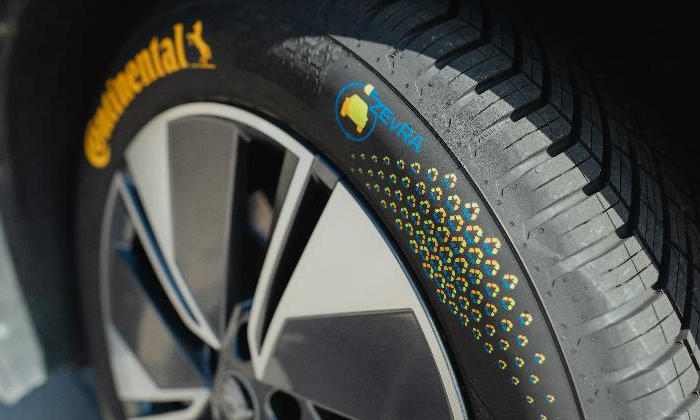
Continental develops ZEvRA concept tire with around 43% recycled materials

innovations

August 25, 2026

Continental has developed a concept tire containing around 43% recycled materials as part of the EU-funded ZEvRA project, which focuses on circularity in electric vehicles. ZEvRA stands for “Zero Emission Electric Vehicles Enabled by Harmonized Circularity” and brings together 28 partners, with Continental participating as the only tire manufacturer in the consortium. The concept tire includes recycled tall oil, steel, rubber from end-of-life tires and polyester fibers made from recycled PET bottles. Continental said the development highlights what is technically possible today while also showing that industrial-scale use of recycled materials requires reliable regulatory frameworks, sufficient supply of high-quality recycled raw materials and scalable recycling technologies. The tire also achieved the highest rating for the EU rolling resistance label, demonstrating the company’s aim to combine sustainability with performance.

Pliteq's CEO says tariffs expose urgent need for U.S. recycling reform

Pliteq's CEO says tariffs expose urgent need for U.S. recycling reform

general

August 24, 2026

Paul Downey argues that US tariffs are pushing North American businesses toward more localized supply chains, creating an opening for the recycling sector to become a stronger source of domestic raw materials. The article says manufacturers are under pressure from higher raw material costs, while retailers are managing increased import costs, and that these conditions could make recycled materials more strategically important if the United States improves its recycling policy framework. The commentary frames recycling not only as an environmental activity but as supply chain infrastructure, arguing that domestic material recovery could help manufacturers reduce exposure to global trade disruption, support reshoring and build more resilient industrial supply chains. However, it also warns that without reform, the United States could miss the opportunity to turn recycling into a competitive advantage.

REDISA response puts focus back on South Africa’s end-of-life tire crisis

REDISA response puts focus back on South Africa’s end-of-life tire crisis

regulations

August 24, 2026

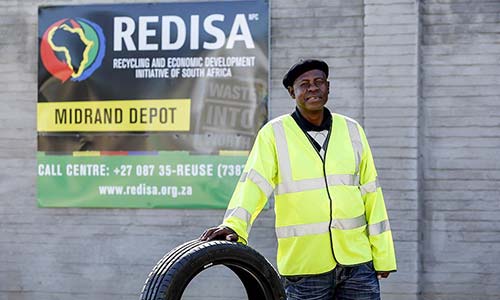
REDISA’s Stacey Jansen has responded to recent reporting about Resolve Communications and REDISA by arguing that the public debate should remain focused on South Africa’s unresolved waste tire crisis. In a letter published by IOL, Jansen said South Africa generates more than 70,000 waste tires per day and recycles less than 30% of them, creating environmental and public health risks in communities where discarded tires accumulate or are burned for scrap metal. She rejected the suggestion that the submission of a critical opinion article through a communications firm amounted to a political campaign against a minister, saying such claims distract from the larger issue of waste tire management. The response also revisits REDISA’s earlier producer responsibility model, its shutdown under the Zuma administration, and the continuing debate over how South Africa should rebuild a functioning tire recycling system.

South Korea launches KRW73 billion R&D program for end-of-life tire recycling

South Korea launches KRW73 billion R&D program for end-of-life tire recycling

regulations

August 24, 2026

South Korea’s Ministry of Climate, Energy and Environment and the Korea Environmental Industry & Technology Institute have launched a national research and development program to convert waste clothing and used tires into higher-quality recycled raw materials. The program will invest KRW73 billion from 2026 through 2030, including KRW25 billion for technologies addressing waste clothing and KRW48 billion for technologies focused on waste tires. For the tire recycling sector, the initiative will support pretreatment of waste tires before pyrolysis to recover higher-quality recycled carbon black and develop tire manufacturing technologies capable of using more than 15% recycled carbon black in new tires. The ministry said the program is intended to strengthen circular resource systems, support commercialization of recycled materials and help Korean manufacturers respond to overseas environmental regulations, including the EU Ecodesign for Sustainable Products Regulation.

Mexico's Cozumel sends another 24 tonnes of end-oflife tires for co-processing

Mexico's Cozumel sends another 24 tonnes of end-oflife tires for co-processing

general

August 24, 2026

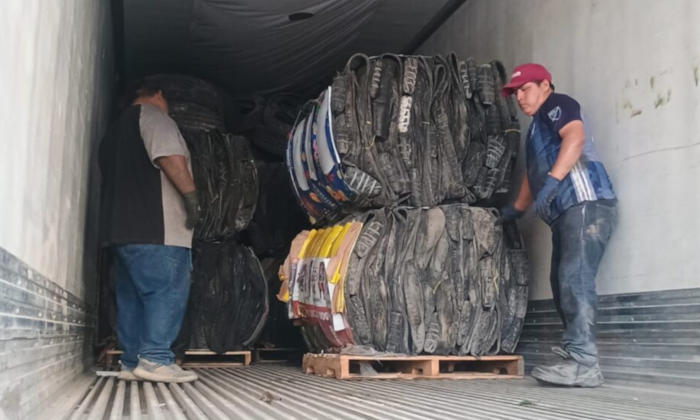
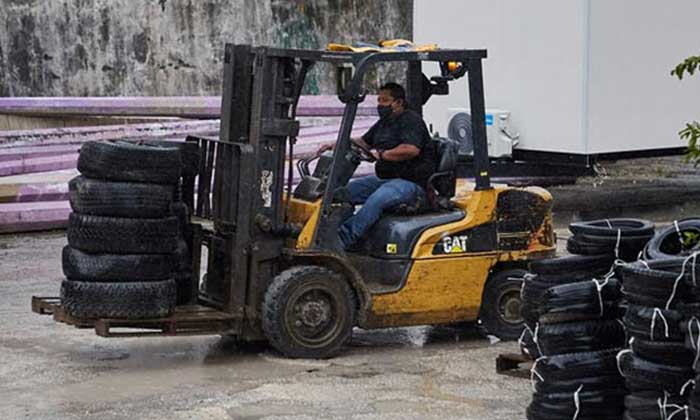
The Government of Cozumel has removed another 24 tonnes of waste tires from the island as part of its ongoing environmental protection, public health and special waste management efforts. The tires were sent to the Geocycle co-processing plant in Macuspana, Tabasco, where they will be used in industrial processing rather than remaining in uncontrolled storage or disposal areas. The municipal action, led by the administration of Mayor José Luis Chacón through the Centro de Acopio de Materiales Reciclables, supports Cozumel’s strategy to reduce tire accumulation, prevent illegal dumping and limit health risks linked to mosquito breeding. The program also connects local tire collection with circular economy and tire recycling routes by moving end-of-life tires from the island to an authorized recovery destination.

Traxion Materials to expand tire shredding and recycling operations in Tennessee

Traxion Materials to expand tire shredding and recycling operations in Tennessee

general

August 24, 2026

Traxion Materials will expand its tire shredding and recycling operations in Campbell County, Tennessee, through an ongoing project that includes more than $5 million in investment and 49 new jobs in Jacksboro. The expansion was announced by Tennessee Gov. Bill Lee, Deputy Gov. and Department of Economic and Community Development Commissioner Stuart C. McWhorter and company officials. Traxion Materials already operates infrastructure covering structured tire collection, wholesale tire distribution, tire shredding and processing, and tire-derived fuel supply. The project is expected to increase the company’s recycling and upcycling activities, strengthen its regional footprint and support the continued movement of used tires into productive second-life applications rather than landfills or stockpiles.

Mexico’s Semarnat promotes circular economy model for tire recycling in Morelos

Mexico’s Semarnat promotes circular economy model for tire recycling in Morelos

regulations

August 23, 2026

Mexico’s Ministry of Environment and Natural Resources is promoting a circular economy model for waste tire collection, recycling and recovery in Morelos, where 13 municipalities are already participating in a system that collects end-of-life tires and transforms them into refuse-derived fuel for industrial use. Semarnat Secretary Alicia Bárcena Ibarra visited the State Center for Circular Economy for Tire Transformation in Jiutepec and the Tepetzingo plant of Cementos Moctezuma, where collected and processed tires are used as alternative fuel in cement production. The initiative forms part of the federal government’s effort to remove abandoned tires from dumpsites, ravines and roads, while shifting from a linear model of extraction, production and disposal toward a circular economy based on reuse, recycling and material recovery. The project involves cooperation between federal, state and municipal authorities and the private sector.

Lawmakers propose provincial plan for end-of-life tire management in Neuquén, Argentina

Lawmakers propose provincial plan for end-of-life tire management in Neuquén, Argentina

regulations

August 23, 2026

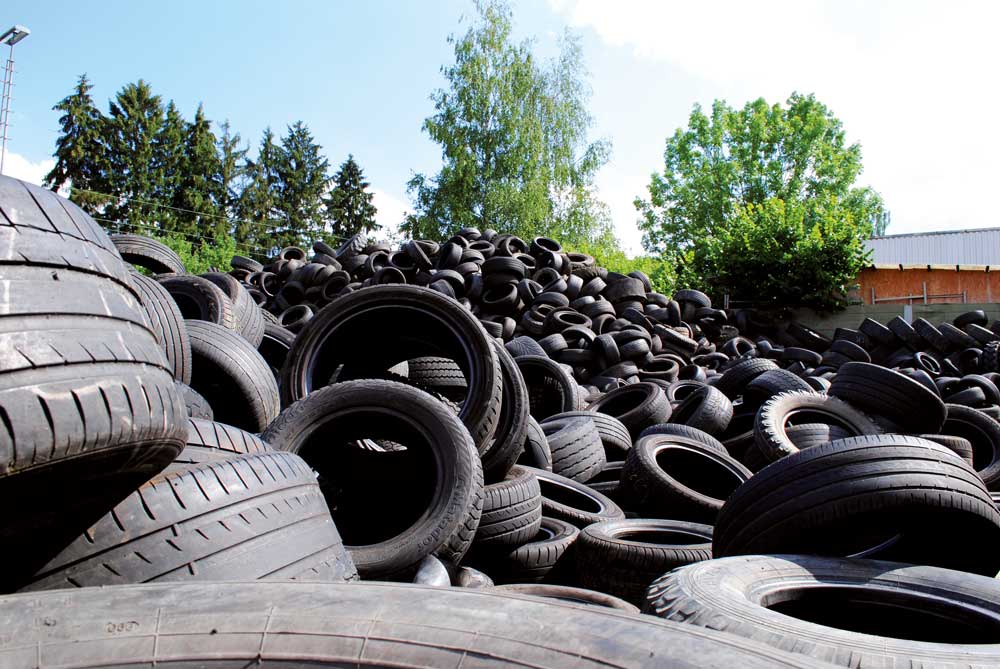
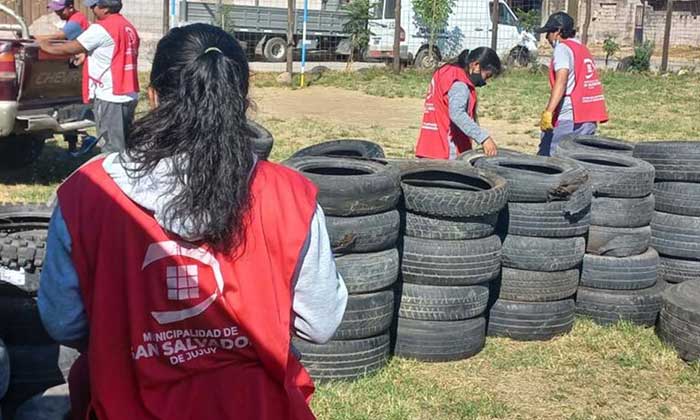
The proposal notes that tires create environmental problems because of their volume and long degradation time, estimated at about 600 years. Improper disposal in public spaces can create habitats for mosquitoes and rodents, which may transmit diseases such as dengue and hantavirus. Open burning is also rejected as a solution because it releases gases and harmful particles that can affect the environment and human and animal health.